
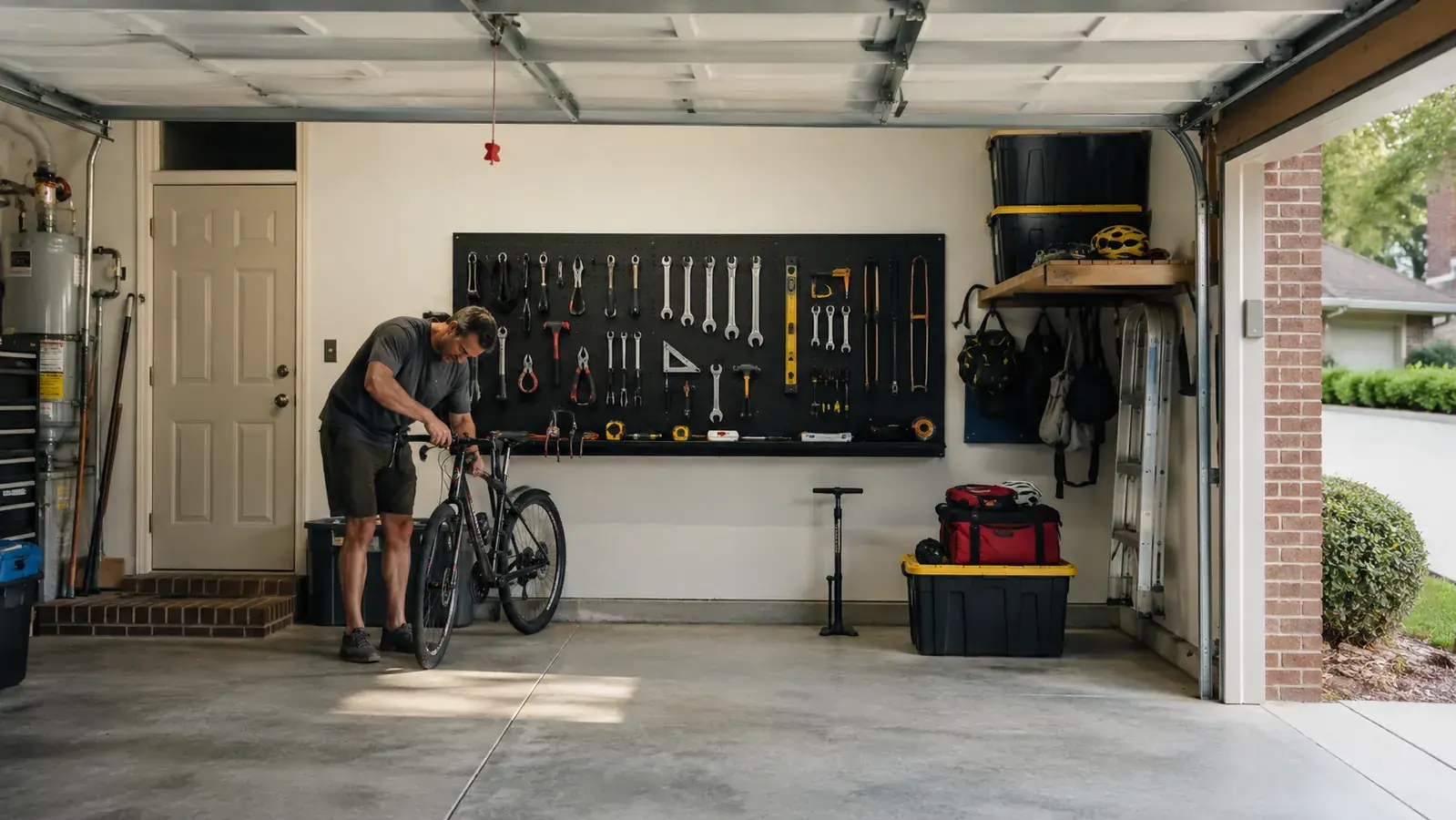
If you've stood in a garage full of tangled extension cords and rusted hand tools trying to decide between a metal pegboard and a slatwall system, here's the short answer: for a working garage where tools get swapped out every weekend, the Wall Control Pegboard Organizer 4 ft. Metal Pegboard kit beats slatwall panels on cost, install time, and how fast you can rearrange the wall at nine at night before a Saturday project. Slatwall isn't a bad system. It's just built for a different job, and a lot of the online comparisons blur that line because they're written by people who've installed neither.
I've hung both in real garages, not showroom mockups. The differences don't show up much in the first week. They show up a few months in, once the hooks have been moved a dozen times, a kid's bike has been leaned against the wall one too many times, and someone's tried to hang a full bag of ice melt on a hook that wasn't rated for it. That's the point where one system starts to feel like it was built for this exact room, and the other starts to feel like it was built for somewhere else.
| Pegboard Garage Organizer | Slatwall Panels | |
|---|---|---|
| Starting price for a 4x4 ft section | Wall Control 4 ft. kit, hardware and hooks included | Higher cost for comparable panel coverage before hooks and bins |
| Panel material | 20-gauge powder-coated steel | MDF or PVC panel with routed slot channels |
| Mounting method | Keyhole-slot metal frame, screws straight to studs, one person can do it in under an hour | Full sheet panel, usually needs a French cleat or heavier stud anchoring, easier with two people |
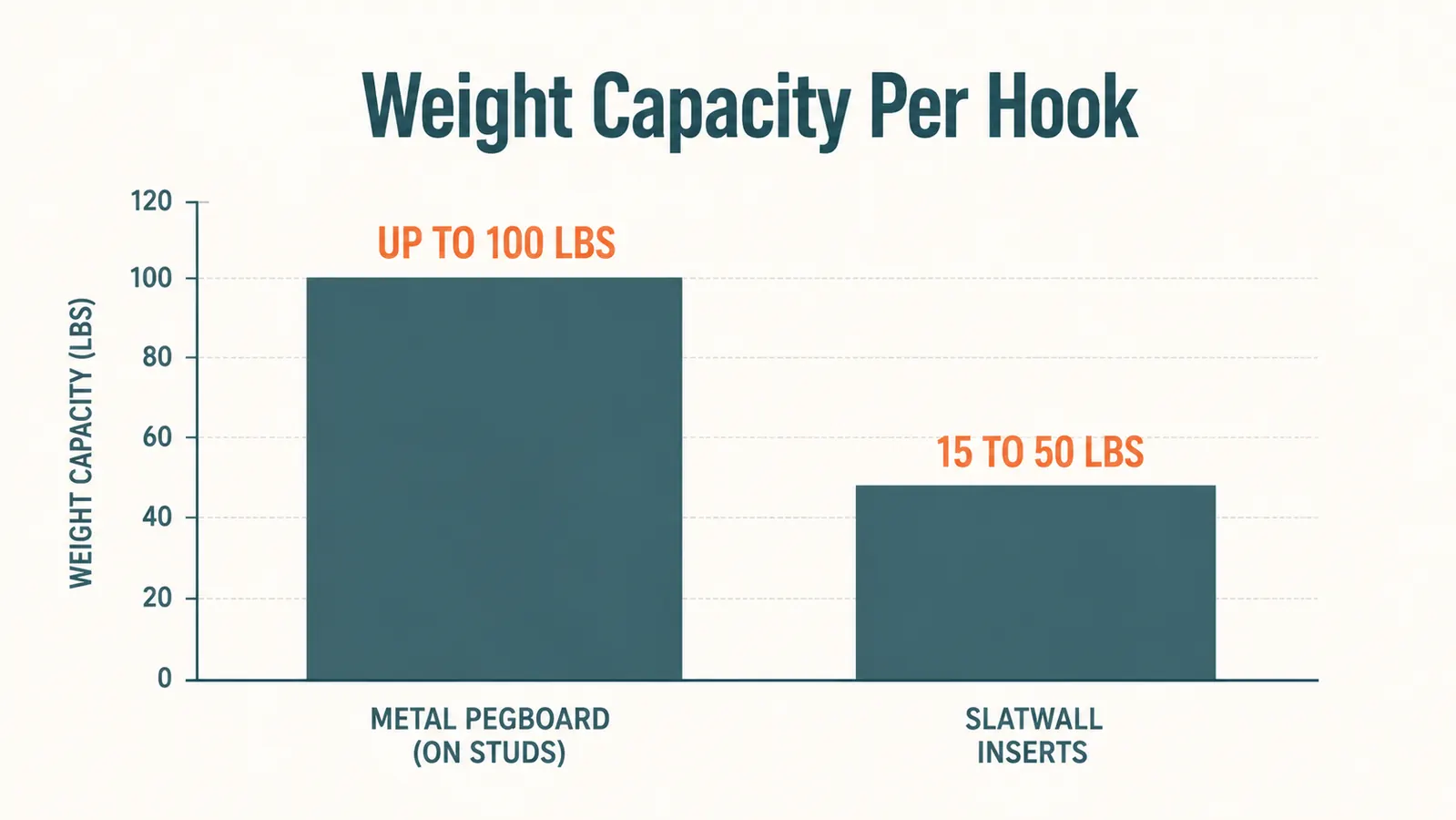
| Weight capacity per hook | Up to 100 lbs on properly anchored studs | 15 to 50 lbs depending on the insert style |
| Wall clearance | About 1.5 inches off the wall, room to tuck cords and small parts behind tools | Sits nearly flush, about 0.75 inch, cleaner look but less hidden storage |
| Rearranging hooks | Lift and slide, no tools needed, takes seconds | Unscrew or unlock an insert bracket, then reposition, a few minutes per hook |
| Best suited for | Garages, workshops, and tool-heavy spaces used daily | Closets, retail-style displays, and finished spaces where looks matter more than raw capacity |
Where the Wall Control Pegboard Wins
The first thing you notice with metal pegboard is the price gap. A 4-foot Wall Control kit runs in the mid-range and comes with the panel, mounting hardware, and a starter set of hooks, so there isn't a second shopping trip to a hardware store to actually use it. To get equivalent coverage in slatwall, you're usually buying raw panel by the linear foot, then adding hooks and bin brackets as separate purchases, and the total climbs into the higher range fast once you account for a full garage wall instead of one small closet section. For a family working with a set budget for the garage this season, that's not a small difference, and it's the kind of gap that decides whether the project happens at all.
Install speed matters more than people expect going in. A neighbor of ours, Theo, mounted his 4-foot Wall Control panel alone on a Sunday afternoon, working around his existing stud spacing without needing to build out a French cleat system first. His wife Dana had assumed it would eat the whole weekend, the way their kitchen shelving project had the year before. It took him about 50 minutes, including finding the studs and double-checking the level. That's the kind of detail that decides whether a project actually happens on the day you planned it or sits in the garage in its box for two months while everyone keeps tripping over the same pile of tools.
The other place metal pegboard pulls ahead is reconfiguration. Wall Control uses a keyhole-slot pattern that lets you lift a hook and slide it to a new position in seconds, no screwdriver, no unlocking a bracket. When your Saturday project changes from framing a shelf to bleeding brake lines on the car, you can rebuild the whole hook layout around what you're actually doing that day, then swap it back that evening. Slatwall's insert brackets are more secure once they're set, but that security comes at the cost of speed. If your garage wall needs to flex week to week the way most working garages do, that tradeoff isn't in slatwall's favor.
Where Slatwall Panels Win
Slatwall earns its reputation in spaces where appearance carries more weight than raw tool capacity. Because the panel sits nearly flush against the wall instead of standing off it, it reads as a finished built-in rather than an obvious storage rig bolted to the drywall. Retail stores use slatwall for exactly this reason, and homeowners converting a closet, a mudroom wall, or a hobby room lean the same direction. If the space is one your guests will actually see on their way to the guest bathroom, slatwall's cleaner profile is a real advantage that metal pegboard doesn't try to compete with, and pretending otherwise does a disservice to anyone shopping for a finished space.
Slatwall's accessory ecosystem also leans toward baskets, shelves, and display hooks rather than heavy-duty tool hangers. That makes it a strong fit for organizing folded linens, craft supplies, or shoes, categories where you want a shelf or a basket more than a peg holding a wrench. A friend of ours, Corinne, redid her mudroom wall in a light wood-toned slatwall and uses it almost entirely for baskets and a few coat hooks. It looks like it was built into the house rather than added on. For that specific use, a black metal pegboard would have looked out of place next to her tile and trim, no matter how well it performed.
The tradeoff Corinne accepted, and one worth naming honestly, is that her slatwall hooks aren't rated for much weight. She learned this the hard way when a basket loaded with bath towels slid off an insert bracket that was fine for lighter loads but not for a full stack of terry cloth. Metal pegboard's steel hooks, seated into a steel panel, simply don't have that failure point in the same way. If you're mixing decorative storage with anything genuinely heavy, that's worth testing before you commit a whole wall to slatwall.

Slatwall wins on looks in a finished room. Metal pegboard wins on speed in a room where the work actually happens.
Stop rebuilding your garage wall from scratch every weekend
The Wall Control 4 ft. Metal Pegboard kit mounts in under an hour, holds up to 100 lbs per hook on studs, and lets you rearrange the whole layout in seconds. See today's price and current availability on Amazon.
Amazon Check Today's Price on Amazon →What a Season of Real Use Looks Like
The comparisons that only cover the first install miss the part that actually matters, which is what the wall looks like after it's been used, not photographed. In Theo and Dana's garage, the pegboard layout has been rebuilt at least six times since it went up: once for a deck project that needed every clamp visible at once, once for winterizing the sprinkler system, and a few more times just because a tool ended up in the wrong spot and got moved. Every one of those changes took under a minute because the hooks lift straight off. None of it left a mark on the panel or loosened the mounting screws.
Corinne's slatwall mudroom, by contrast, has stayed almost exactly the way she first set it up, and that's by design rather than limitation. A finished entry space doesn't get rearranged the way a garage tool wall does, and slatwall's slower reconfiguration has never bothered her because she isn't fighting a project deadline in that room. The lesson isn't that one system is more durable than the other. Both have held up well physically. It's that the rooms themselves ask for different things, and each system happens to match a different room's rhythm.

Masonry Walls and Rental Garages
One detail that gets skipped in most comparisons is what's actually behind the drywall. A lot of garages, especially older ones, have exposed studs or even cinderblock rather than a finished wall, and both pegboard and slatwall need a solid mounting surface to hold real weight. Wall Control's frame mounts to studs with the included hardware, and concrete anchors are a cheap add if you're mounting straight to block. Slatwall panels, being full sheets, generally need a more involved frame-out if the wall isn't already flat drywall over studs, which adds another afternoon and another set of materials most people don't budget for upfront.
If you're renting, or you know this garage isn't a forever situation, metal pegboard is also the easier system to take with you. A Wall Control panel comes down as a unit, patches to a few screw holes, and remounts in the next garage in under an hour. Pulling a slatwall installation back off a wall is a bigger job, and it's not really designed to be portable in the way pegboard is. That's one more reason it tends to show up in finished, permanent rooms rather than garages people expect to leave in a few years.
How Much Wall You Actually Need
A single 4-foot Wall Control kit covers a surprising amount of tool storage on its own, but most garages end up wanting more once the first section fills in. Wall Control's panels are designed to connect edge to edge, so a second or third 4-foot kit extends the same grid without starting over, and the hooks from the first section slide right onto the new panels. That modularity matters more than it sounds like it should. A lot of buyers start with one section to test the idea, then add a second panel a few months later once they've seen how it actually gets used, and the system is built to let them do that without ripping anything down first.
Slatwall can also be extended panel by panel, but because the sheets are usually cut and installed as a single job, adding to them later tends to mean bringing back whoever did the original install rather than a weekend project you handle yourself. If you think there's a real chance you'll want to double your wall coverage in a year, that's worth weighing against slatwall's cleaner finished look now. Buying a little more pegboard than you think you need today is a cheap way to avoid a second install project later, and at a modest price for four feet, going a size up rarely breaks the budget.
Who Should Buy Which
If the wall in question is a garage, a workshop, or any space where tools get grabbed, used, and put back multiple times a week, metal pegboard is the better call, and the Wall Control kit specifically holds up under that kind of daily churn better than the lighter big-box pegboard panels we've tried. We go deeper on how ours has held up over six months, including the two hooks that eventually failed, in our full long-term pegboard review, and if you want the fast case for why a wall system beats bins and shelves in the first place, that's covered in 10 reasons pegboard systems fix garage clutter.
If the wall in question is a closet, a mudroom, or anywhere that needs to look finished more than it needs to hold a circular saw, slatwall panels are the more sensible pick, even with the higher price and slower reconfiguration. Just budget for the heavier install and keep an eye on how much weight actually goes on each hook. Pick the system that matches how the room gets used every single day, not which one photographs better for a listing.
See the pegboard system built for garages that actually get used
Steel construction, stud-mounted hardware, and a hook layout you can rebuild in seconds. Check today's price on Amazon before you commit to a slower, pricier slatwall install.
Amazon Check Today's Price on Amazon →