
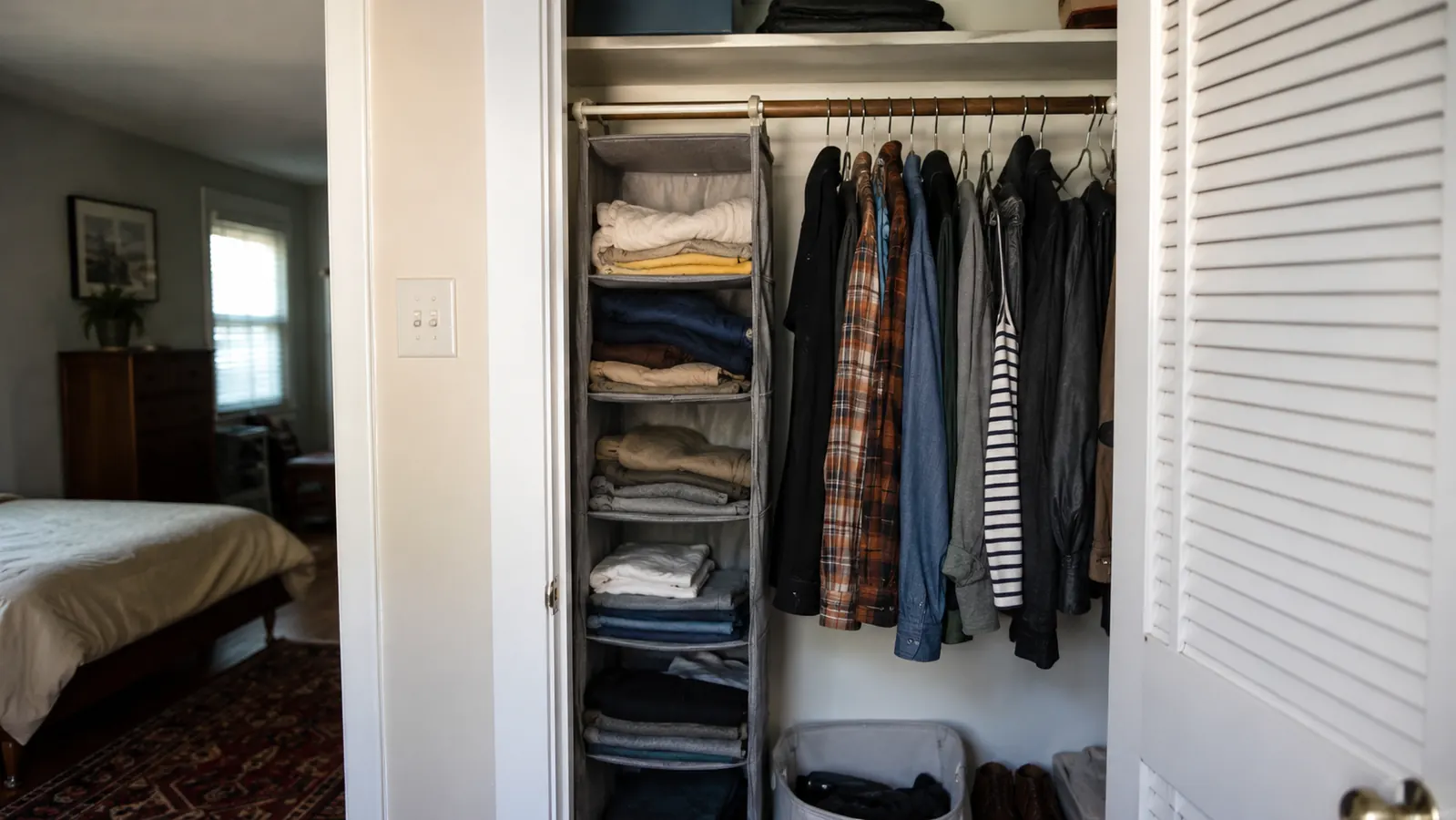
Last December, my daughter Maren moved back into her old bedroom for a few months between apartments, and the closet in that room, a narrow 1962 reach-in with a single wire rod and one flimsy wire shelf up top, could not hold what a grown adult owns. We tried stacking bins on the floor. We tried a second rod. Neither one lasted a week before it collapsed into a pile. What finally worked was the Simple Houseware 5 Shelf Hanging Closet Organizer, a gray fabric shelving unit that hangs straight off the existing closet rod with no drilling, no anchors, and no calling my husband in from the garage.
I want to be upfront about something before I get into the eight-month verdict: I've reviewed a lot of closet products for this site, and most of them get a burst of use in the first two weeks while everyone's excited about the new system, then quietly get abandoned. This one didn't. It's still hanging in that closet right now, still getting loaded and unloaded most mornings, and it's earned its spot enough that I bought a second one for my own hall closet in March. That's the review in one sentence. Here's everything that happened to get me there.
The Quick Verdict
A genuinely useful, no-tools fix for a small closet that still shows real wear if you overload the bottom shelves, but it earns the space back fast enough that most people won't care.
Amazon Check Today's Price →Still hanging strong after eight months of daily use
If your closet has one rod and nowhere near enough shelf space, this is the fastest fix that doesn't involve a drill. Check today's price and current stock on Amazon before it shifts again.
Amazon Check Today's Price on Amazon →How I've Used It Since December
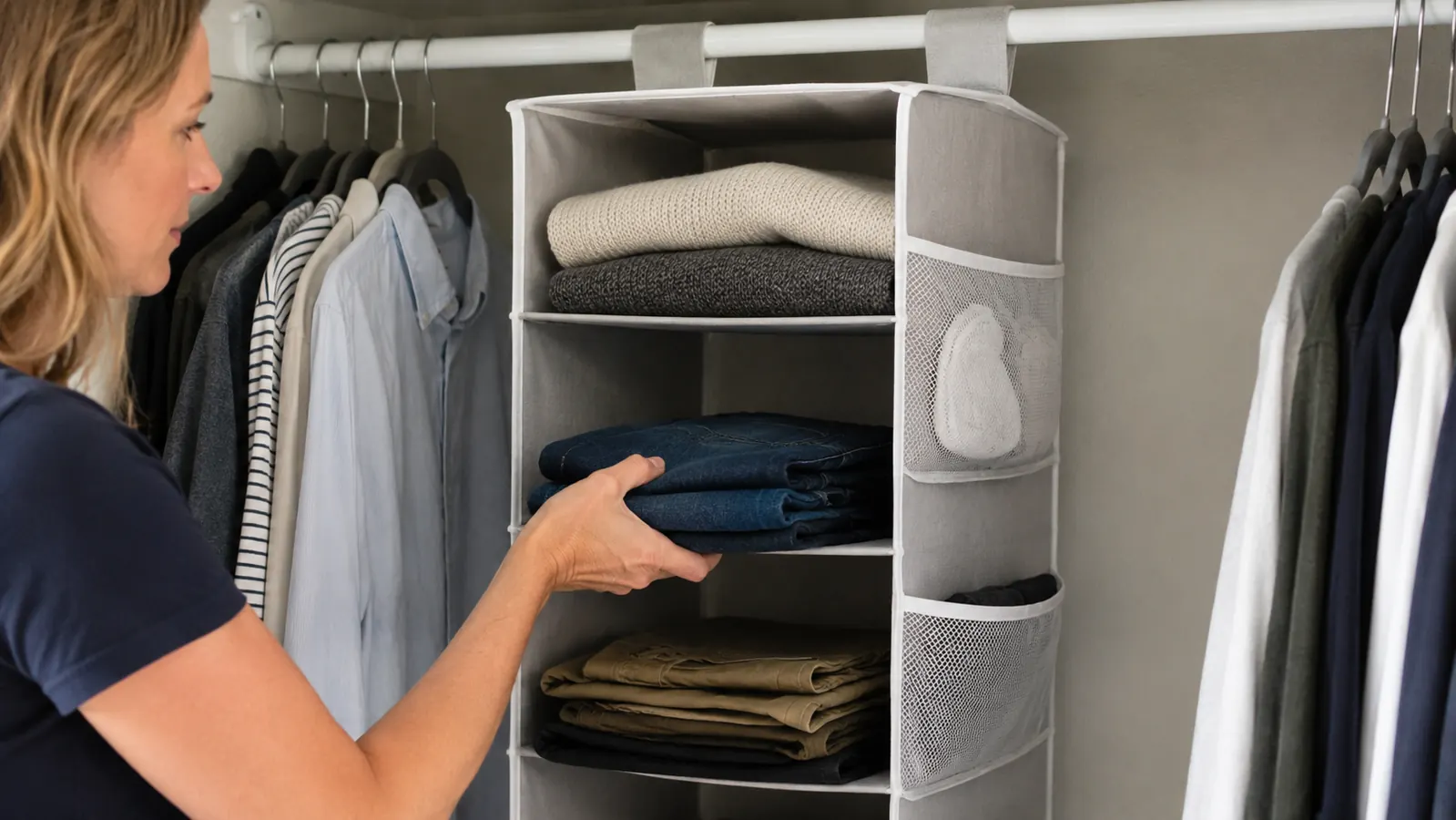
Setting up the Simple Houseware organizer took about four minutes, most of which was spent figuring out which side of the shelf frame faced forward. You loop the Simple Houseware top strap over the existing closet rod, snap the plastic side clips into place along the shelf frame to keep it from swaying, and you're done. No screws, no stud finder, no patching holes when you move out. That last part mattered a lot to us since Maren was renting, and it's probably the single biggest reason I recommend this over a wall-mounted shelving system to anyone in an apartment or a house they don't plan on staying in forever.
For the first six weeks, we used it almost entirely for folded clothes, sweaters on top, jeans and leggings in the middle shelves, gym clothes on the bottom. By February, once the novelty wore off and real life took over, the shelves started collecting the things that don't have another home: a stack of extra bedsheets, a shoebox of hair ties and old phone chargers, a rolled-up yoga mat wedged sideways across the bottom opening. That mixed use is closer to how most people actually treat a closet shelf, and it's the phase that tells you the most about whether a product holds up.
By April I'd hung a second Simple Houseware unit in my own hall closet, the one that catches winter coats, an overflow of towels, and my husband's fishing gear when he forgets to put it in the garage where it belongs. That closet gets opened and closed a dozen times a day by two adults and a dog who likes to nose through the bottom shelf looking for a stray sock. Between the two closets, I've had close to a year of combined daily use to draw conclusions from, not just a two-week test run before the review copy shipped back.
What's Actually in the Box and How It Hangs
The Simple Houseware organizer ships flat, folded down into a surprisingly small package for something with five shelves. It's built from a wire frame wrapped in a breathable gray fabric, similar in feel to the shelf liners you'd find in a dorm closet caddy, with clear plastic side clips at each corner that snap the whole thing into a rigid box shape once it's hung. The top strap has a wide Velcro loop that wraps around the closet rod, and it's genuinely wide enough that I never worried about it slipping off a standard 1.25-inch rod, even loaded down.
Each shelf measures roughly 12 inches deep by 11.5 inches wide, which is enough for a stack of six or seven folded t-shirts, three or four pairs of jeans laid flat, or a couple of shoeboxes turned sideways. It's not a huge footprint, and if you're picturing something that swallows an entire wardrobe, this isn't that. What it's actually good at is turning one dead vertical space, the empty air above the floor and below the existing shelf, into five distinct, grab-and-go compartments instead of one shapeless pile.
The Small Details You Only Notice After a While
A few things only showed up once we'd lived with it past the first month. The fabric shelf liners hold onto lint and pet hair more than I expected, since our dog likes to sniff around the bottom shelf, so I run a lint roller over the top two shelves every couple of weeks. It's a two-minute chore, not a dealbreaker, but nobody mentions it in the listing photos. The gray color also shows dust faster than a darker fabric would, which matters if your closet doesn't get vacuumed as often as it should.
On the plus side, the shelves stayed square and didn't twist sideways even when Maren's closet door got bumped into it more than once moving furniture in and out during her transition. The plastic clips at the corners do their job of keeping the frame rigid, and I never had to re-snap one back into place after the initial setup, aside from the one incident with my son's soccer bag mentioned below. For a product built almost entirely from fabric and wire, it holds its shape better than I expected going in.
Eight Months of Weight, Sag, and Real Laundry
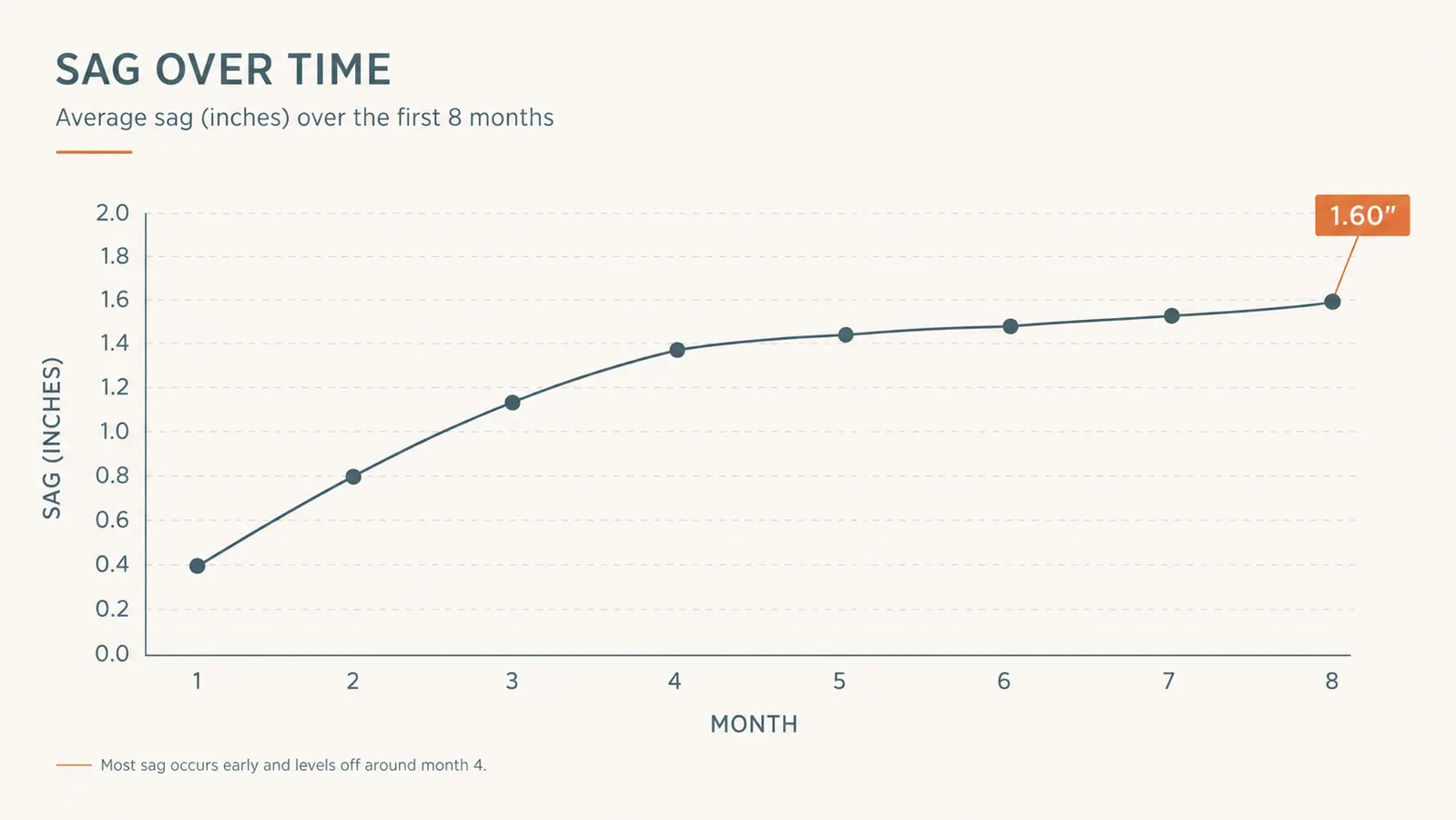
Here's where I have to be honest, because this is the part most listings skip entirely. The top three shelves have held their shape almost perfectly. I can still see the crisp square edges I had on day one. The bottom two shelves are a different story. By month three, once we started using the lowest shelf for heavier items like folded jeans and a stack of bath towels, I noticed a visible dip in the middle of that shelf, maybe half an inch, enough that anything stacked there now leans slightly toward the center instead of sitting flat.
I measured it out of curiosity rather than complaint, tracking it loosely from month one through month eight. The sag showed up fast in the first ten to twelve weeks and then largely stopped progressing, which tells me it's the fabric and wire settling into its final shape under load rather than a sign the whole thing is slowly failing. It's still fully functional. Nothing has torn, no wire has poked through the fabric, and the plastic corner clips that hold the frame square haven't cracked, which was actually my bigger worry going in given how thin they look in photos.
The one thing I'd tell anyone before they buy is to keep your heaviest items, think stacks of towels or bulky sweaters, on the top two or three shelves rather than the bottom, and to skip putting anything genuinely heavy on the very bottom shelf, since that's the one furthest from the rod strap and the one that flexes the most. Treat it more like a soft-sided dresser than a solid wood shelf and it lasts a lot longer, and you'll never notice the sag at all.
Who It Freed Up Space For, and Where It Fell Short
For Maren's closet specifically, this thing solved a real problem in under five minutes. Reach-in closets from that era of home building were sized for a much smaller wardrobe than anyone actually owns now, and a single rod with one flimsy shelf just doesn't cut it. Sliding this in gave her five defined zones instead of a floor pile, and because it's soft-sided, it didn't fight her for space against the hanging clothes on either side the way a rigid wire shelf unit sometimes does.
Where it struggled was in my son's closet, which we tried it in briefly over the summer. He's twelve, plays travel soccer, and owns approximately forty pounds of cleats, gloves, and bags that all want to live on the floor of that closet regardless of what we give him. The shelves themselves held up fine, but a fabric-sided organizer isn't rigid enough to stop a kid from just shoving a bag against it sideways, and within a month one of the side clips had popped loose from a bag getting jammed into the gap. It's a great fit for folded soft goods. It's not built to referee a preteen's sports gear, and I moved it back to my hall closet after that experiment.
What I'd Consider Instead If I Needed More Structure
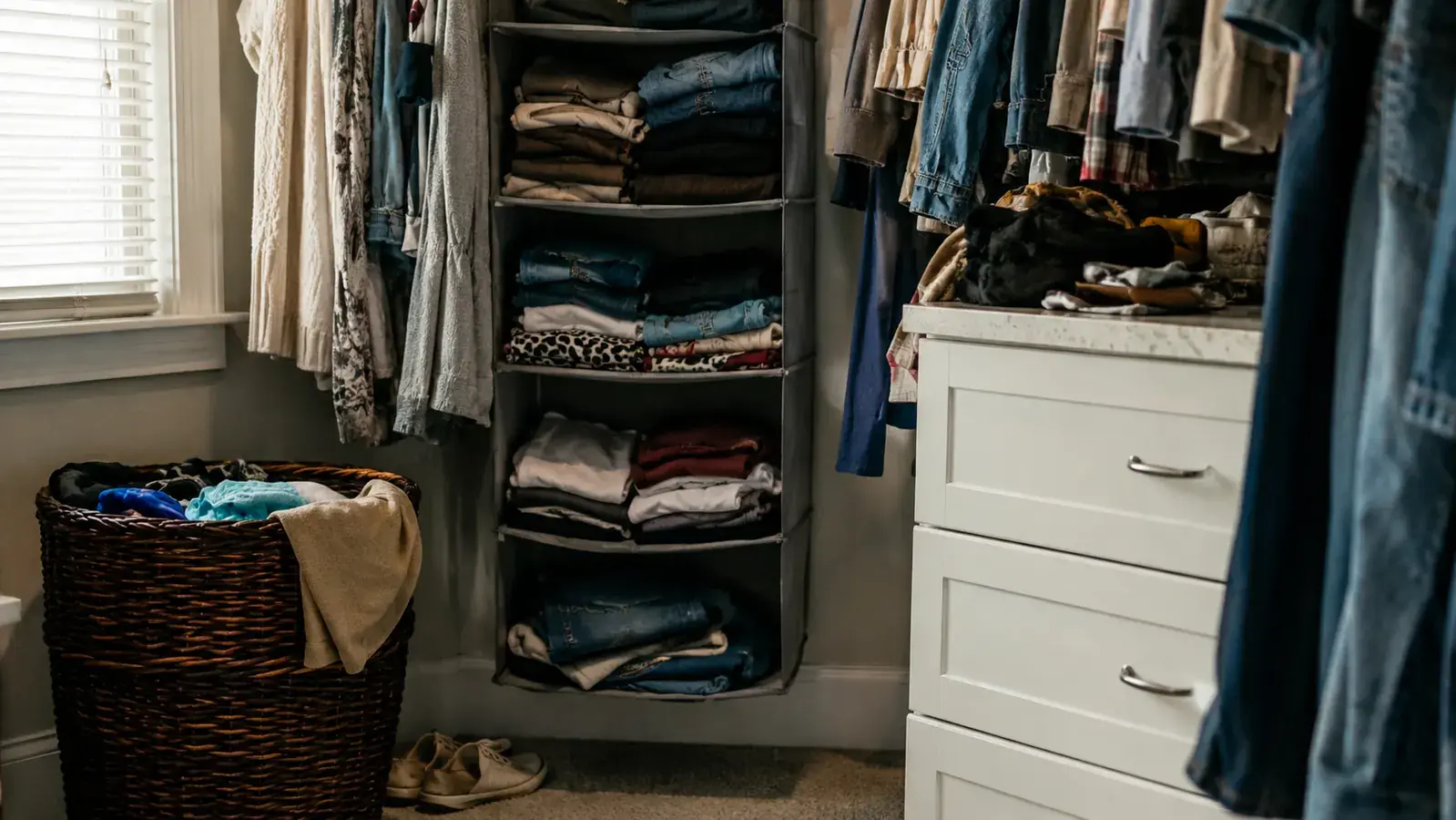
If your closet needs to hold genuinely heavy or bulky items, think large storage bins, stacked shoeboxes, or anything with hard edges, I'd look at a rigid wood or wire shelf divider system instead, something bolted or tension-mounted rather than hung from a strap. I wrote a full side-by-side on exactly that trade-off, cost, install time, and how each one handles daily abuse, in our hanging organizer versus closet shelf dividers comparison, if you're trying to decide between the two before you buy either one.
But for the specific problem this product is built to solve, a small or medium closet with one rod and not enough shelf space for folded clothes, I don't think there's a faster or cheaper fix. It costs less than a fast food order for two, it requires zero tools, and it comes back down just as easily if you move. If you want more reasons this style of organizer keeps showing up in small-space guides, I broke down ten of them in this piece on why hanging organizers fix small closets fast.
What I Liked
- Hangs in under five minutes with zero tools or drilling
- Renter-friendly, comes down just as easily as it goes up
- Top three shelves have held their shape through eight months of daily loading
- Wide Velcro strap hasn't slipped off the rod once, even loaded down
- Costs a fraction of a built-in shelving system
Where It Falls Short
- Bottom shelf visibly sags under sustained heavy weight after about ten weeks
- Not rigid enough for kids shoving in bulky sports gear
- Only about 12 inches deep, so it won't hold oversized bins
- Fabric shelves collect lint and dust faster than a solid surface would
- Plastic corner clips feel thin and can pop loose under repeated jamming
It's not a piece of furniture. It's more like a soft-sided dresser you hang from a rod, and once I started treating it that way, it stopped disappointing me.
Who This Is For
This is the right call for anyone dealing with a single-rod reach-in closet that's short on shelf space, especially renters who can't drill into the wall, college kids in a dorm, or anyone who just needs a fast, cheap way to stop folded clothes from turning into a shelf-less pile. It's also a smart pickup for a guest room or kids' closet where the contents are mostly soft goods like clothes, towels, or bedding rather than anything with hard edges or real bulk.
Who Should Skip It
Skip this one if your closet mostly needs to hold heavy bins, sports equipment, or anything with sharp corners that will jam into the fabric sides over time. If you have the budget and you're not renting, a mounted wood or wire shelving system will simply outlast this in that scenario. It's also not a fit if you need real depth, at 12 inches per shelf it won't swallow large storage totes the way a deeper shelving unit would.
Eight months later, it's still the first thing I recommend for a cramped reach-in closet
If you just need folded clothes off the floor and out of a pile, this is the cheapest, fastest fix I've tested that's held up past the first month. See current availability and today's price on Amazon.
Amazon Check Today's Price on Amazon →