
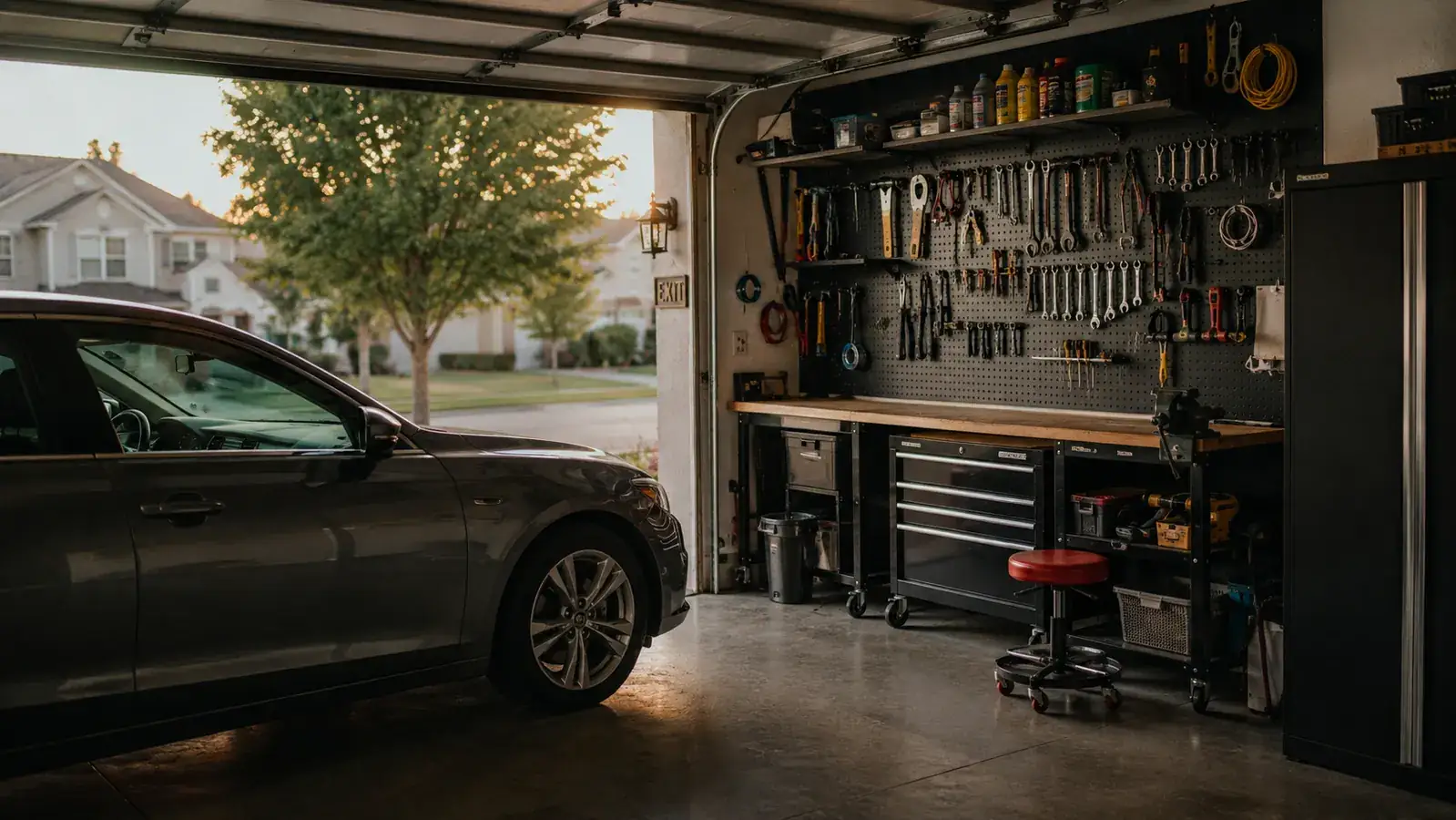
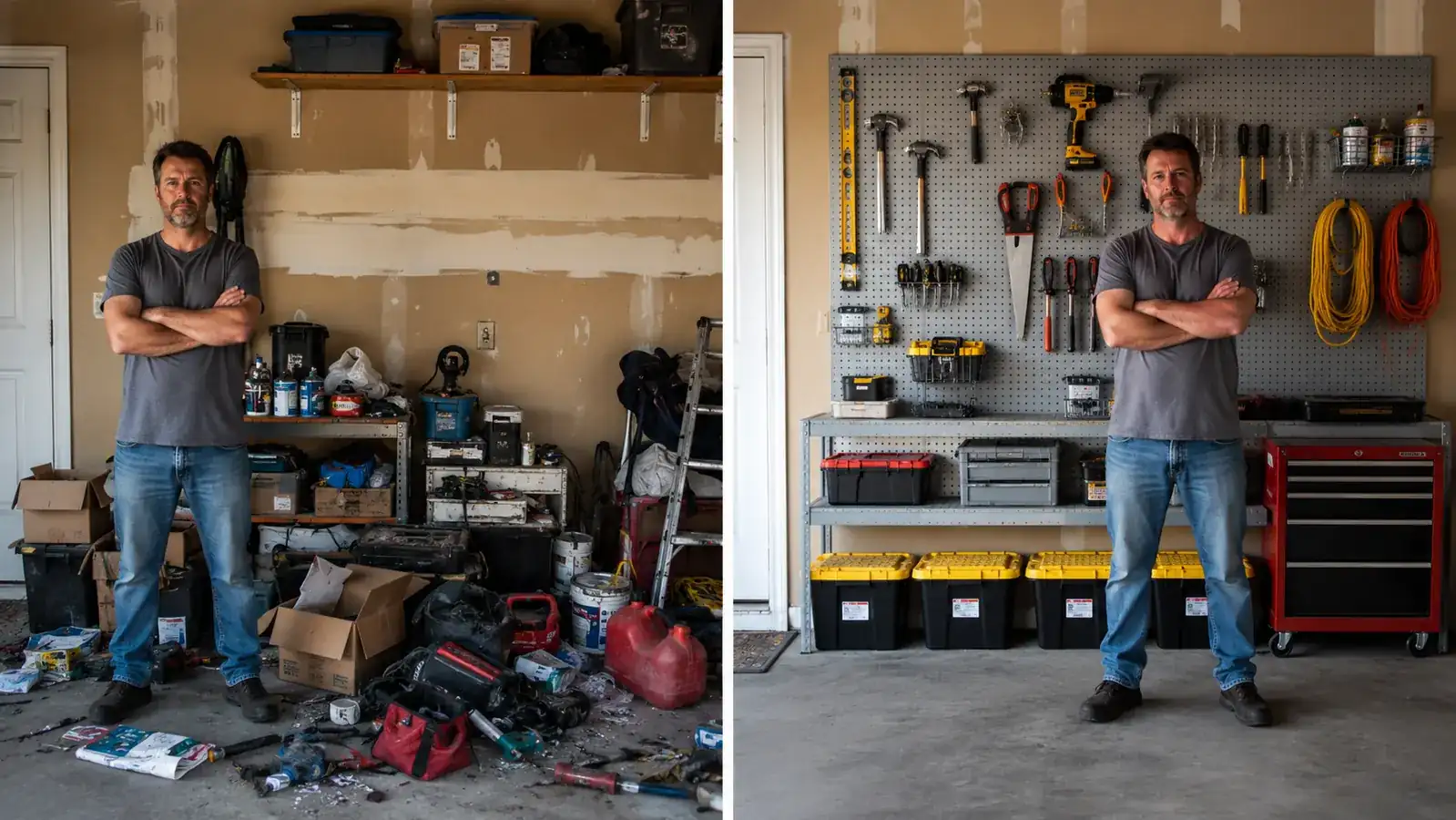
For about two years, our garage was where things went to disappear. Rakes leaned against the dryer. A bin of sidewalk chalk lived on top of the paint cans. My husband Grant's socket set had migrated into three different shoeboxes, and none of them had lids anymore. We hadn't parked a car in there since the spring Wes started riding his bike, because there simply wasn't a clear path to the door. What finally sorted it out was a Wall Control metal pegboard panel on the one clear stretch of wall we had left.
The night that finally broke me was nothing dramatic. Grant went out to grab the extension cord for the string lights and came back fifteen minutes later, annoyed, holding the wrong cord, having tripped over the rake twice in the dark. I remember standing in the kitchen thinking, we own every tool a normal family needs, and not one of them is where we could actually find it in an emergency, and that felt like a bigger problem than a messy garage usually gets credit for.
I'd tried the plastic bin approach the year before. Labeled totes, stacked on a shelf unit from the hardware store. It helped for about six weeks, then the shelf started sagging under a bin of tile spacers nobody remembers buying, and everything slid back into a pile because putting a tool away meant unstacking three bins to find the right one. Bins solve storage. They don't solve access, and access was our actual problem.
So I started looking at pegboard systems instead of bins, and kept landing on the Wall Control 4 ft. Metal Pegboard Organizer kit. It's a steel panel, not the pressed fiberboard kind that sags and tears out screw holes after a summer of heat in a garage. That mattered to us specifically because our garage sits west-facing and hits close to 100 degrees some July afternoons.
Before I ordered it, I read through a long-term review of the same pegboard kit to see how the steel actually held up after a season of daily use, not just an unboxing. That's what tipped me from curious to convinced. I ordered it on a Tuesday, mostly to see if it would even fit the wall above Grant's workbench, the one stretch of garage that wasn't already claimed by the water heater or the trash cans.
The Wall Control panel arrived in two sturdy cardboard sleeves, heavier than I expected, which felt like a good sign rather than a bad one. If you're weighing metal pegboard against a slatwall setup like some of our neighbors have, I'd also point you to a side-by-side comparison of pegboard and slatwall panels before you buy, since the two systems handle heavy tools differently.
I didn't want a garage that looked like a magazine spread. I wanted to be able to find the tape measure without emptying three shoeboxes first.
See What's Actually Included in the Wall Control Kit
The 4 ft. metal pegboard kit ships with the steel panels, mounting hardware, and a starter set of hooks, so you're not making a second trip to the hardware store before you can hang a single tool.
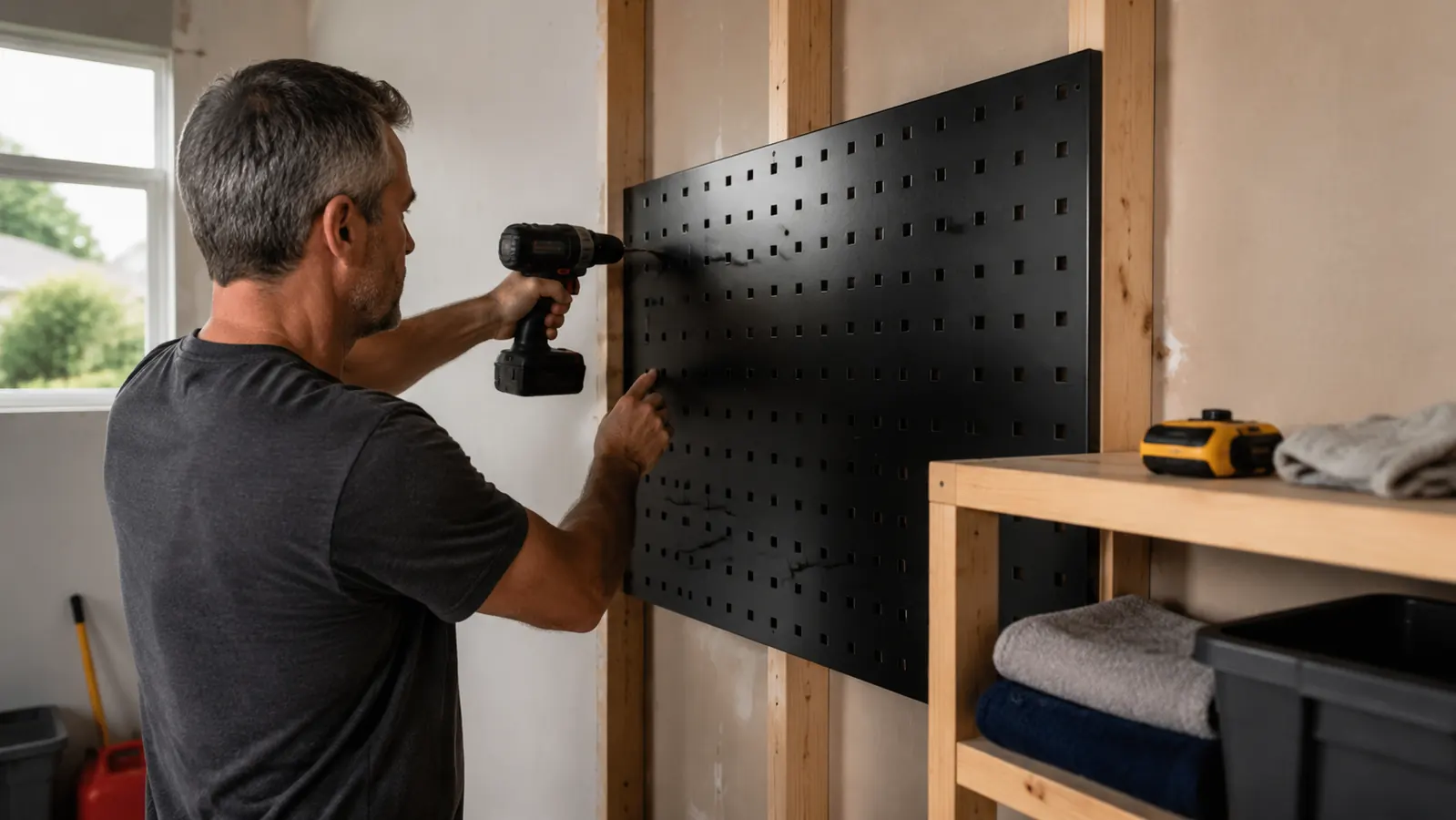
Amazon Check Today's Price on Amazon →Grant did the actual mounting on a Saturday morning, and it took him a little under two hours, most of that spent finding studs and getting the first panel level. The metal frame pieces go up first, screwed into the studs, and the Wall Control pegboard panels then hang off that frame with a gap behind them, which is the part that actually matters. That gap is what lets the hooks lock in instead of just resting in a hole like a wood pegboard.
He hung it slightly higher than we planned at first, then lowered it six inches once we realized our son Wes is tall enough now to want to reach the bike pump himself. That's the kind of adjustment you can only make once you're staring at the actual wall, not a diagram, so I'd tell anyone to hold off on final placement until the panels are dry-fit.

The hooks were the part I underestimated. There are dozens of shapes in the kit and in the add-on packs, and figuring out which hook holds a hammer without letting it slide, versus which one you need for a coiled extension cord, took some trial and error. Grant re-hung about a third of the tools once, after the first layout put the heaviest items on the Wall Control panel section with the least support behind it. It wasn't a huge deal, just an extra twenty minutes he grumbled about at the time.
Six weeks in, the difference isn't just visual. Grant can find the right size wrench without pulling out four others first. The rake and the broom finally have a spot they return to, mostly because it's genuinely easier to hang them back up than to lean them against something. We can park a car in there again, which sounds small until you've spent two winters scraping ice off a windshield because the garage stopped being usable.
What I'd Tell You If We Were Sitting at My Kitchen Table
If you asked me over coffee whether this was worth doing, I'd tell you the truth: it's not magic, and it won't organize itself. You still have to decide where things go and actually hang them back up, same as any system. What changed for us is that the wall finally gave every tool an obvious home, and an obvious home is the whole trick. Bins hide the mess. A pegboard makes it visible enough that leaving something on the floor feels like a choice, not an accident. If your garage has a clear stretch of wall and a family that keeps losing the same three tools, I think it's worth the Saturday morning.
Give Your Garage Wall an Actual Job to Do
If your tools have been living in shoeboxes and floor piles, a 4 ft. metal pegboard wall might be the fastest weekend fix you haven't tried yet.
Amazon Check Today's Price on Amazon →