
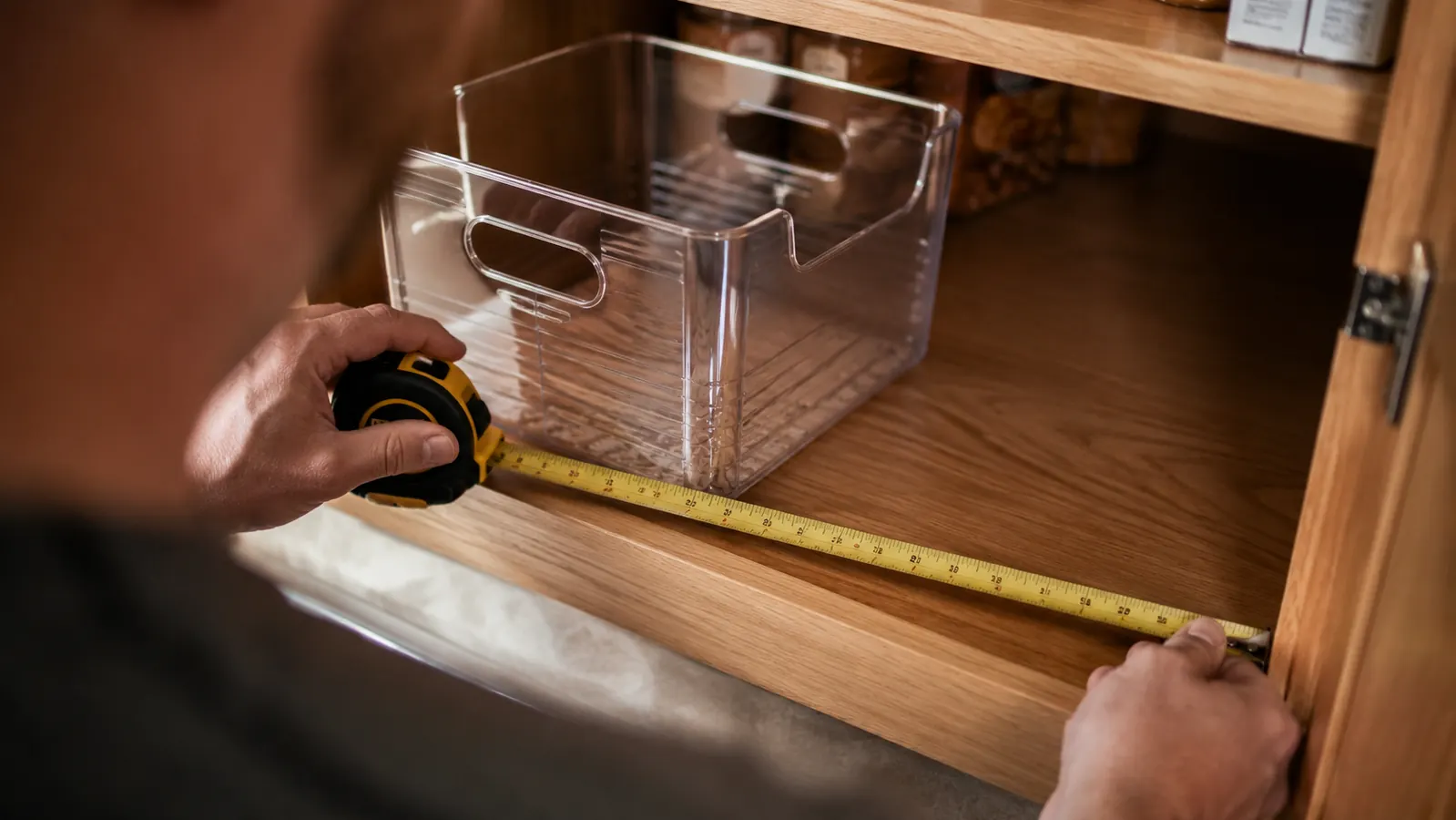
The tape measure matters more than the reviews do. That's the first thing I tell any client who asks me about the YIHONG six pack of clear pantry bins, and it's the thing almost nobody mentions in a five star review written two days after unboxing. I've installed this exact six pack, $23.99 for six large bins with cutout handles, in four different clients' kitchens over the past year, plus my own pantry. The pattern I keep running into has nothing to do with whether the plastic cracks or the color holds up over time. It's about depth, stacking, and lids, and none of those three things show up clearly on the product page.
Take Marisol, a client of mine with a narrow galley kitchen in a building from the 1960s. Her pantry is one solid wood cabinet with three shelves, no wire racking, and a shelf lip that drops about half an inch below the top of the opening. We ordered the same six pack I'd already been using at home, assuming it would slide in the way it had for me. It fought us the whole way, and we ended up returning two of the six and swapping in a shallower bin for that one shelf. That's the review I wish someone had handed me before I bought a set for her sight unseen, so that's the review I'm writing here. I already covered whether these bins survive daily use over the long haul in a separate piece, nine months in my own kitchen. This one is about the sizing, stacking, and lid questions that decide whether they'll even fit your shelf before you get to worry about anything else.
The Quick Verdict
Reliable, clear, and priced fairly, but the listing photos hide two real limits: tight shelf clearance and stacking that only works when the bins are empty. Measure your shelf depth and door swing before you buy, or you may end up doing the return dance Marisol almost did.
Amazon Check Today's Price →Before You Order a Six Pack Sight Unseen, Grab a Tape Measure First
The bins themselves are sturdy and clear enough to earn their shelf space. The mistake I see clients make is ordering before they check depth and door clearance. Here's what to measure before you check today's price.
Amazon Check Today's Price on Amazon →How I Actually Test the Stuff Nobody Warns You About
Most of what gets called a review online is one person's kitchen, one set of bins, two weeks of use, and a lot of enthusiasm. My method is slower and less photogenic. As a professional organizer, I install the same product in multiple households with different shelving, different families, and different failure points, then I compare notes. For this set, that meant my own reach in pantry, Marisol's solid wood cabinet, a client named Deacon with a deep garage pantry he uses for overflow groceries, and a client named Ingrid with tall wire shelving in a corner cabinet. Four pantries, four very different outcomes.
I'm not interested in whether a bin looks good in a photo taken the day it arrives. I'm interested in whether it fits the shelf you already own, whether it holds up when someone yanks it out one handed while holding a toddler on the other hip, and whether the thing you assumed from the listing photos turns out to be true once the box is open. For these bins specifically, the surprises weren't about the plastic quality. They were about numbers nobody puts front and center: the true footprint once you account for the handle cutouts, and what actually happens when you try to stack a second bin on top of a full one.
So this review skips the unboxing excitement and goes straight to the three things that decided whether each household kept the set, returned part of it, or had to rework their shelving to make it work.
The Sizing Truth Nobody Puts in the Listing
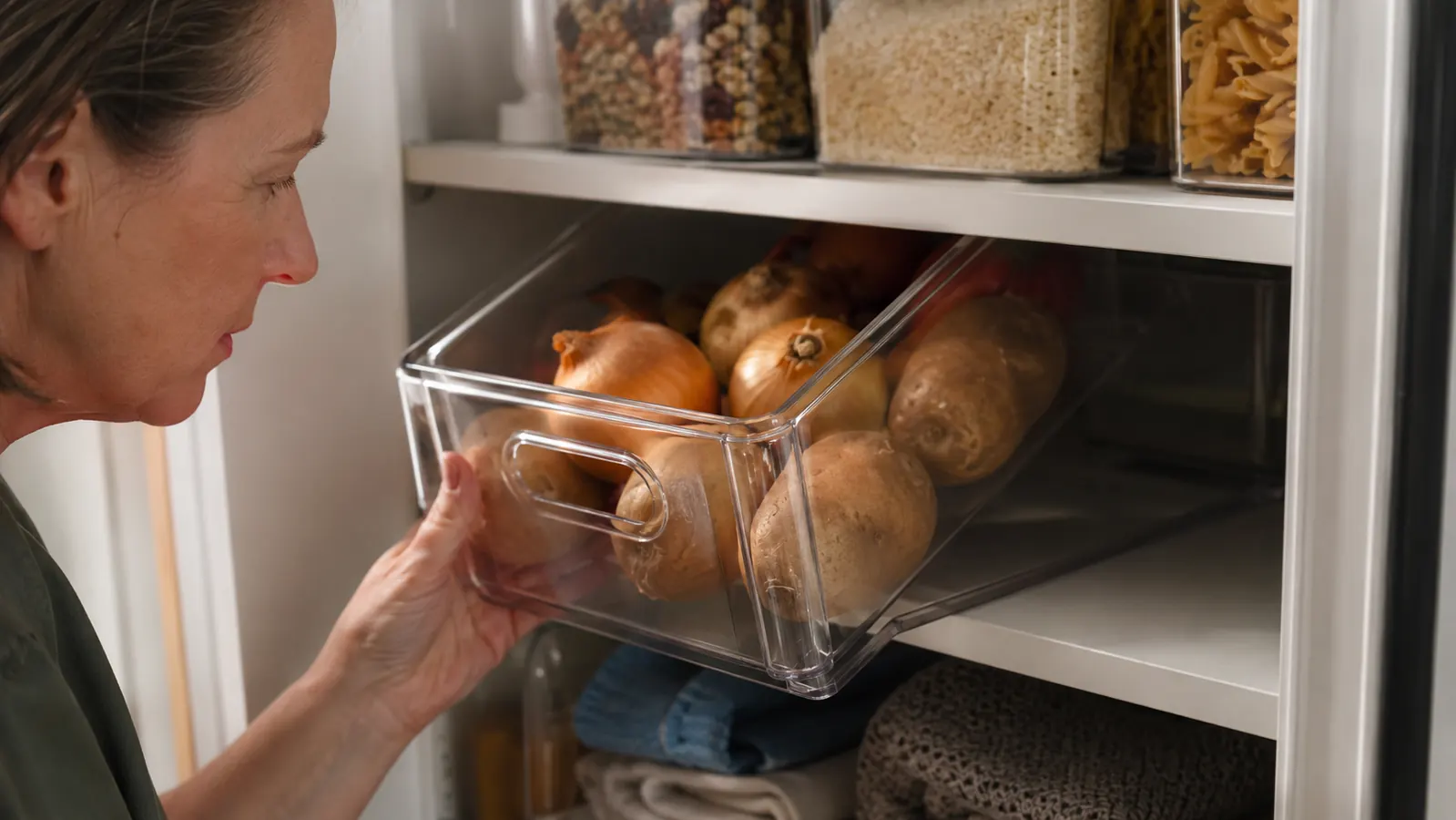
The large bins in this set measure close to 14.5 inches long, just over 6 inches wide, and about 6 inches tall, based on my own measurements with a tape rather than the rounded numbers on the listing. That sounds simple enough until you factor in the cutout handles on each short end, which add roughly a quarter inch of clearance you need on both sides just to get a grip without scraping your knuckles on the shelf above. In a cabinet with tight vertical spacing, like Ingrid's corner unit, that quarter inch was the difference between bins that slid out smoothly and bins that required tilting them forward at an angle every single time.
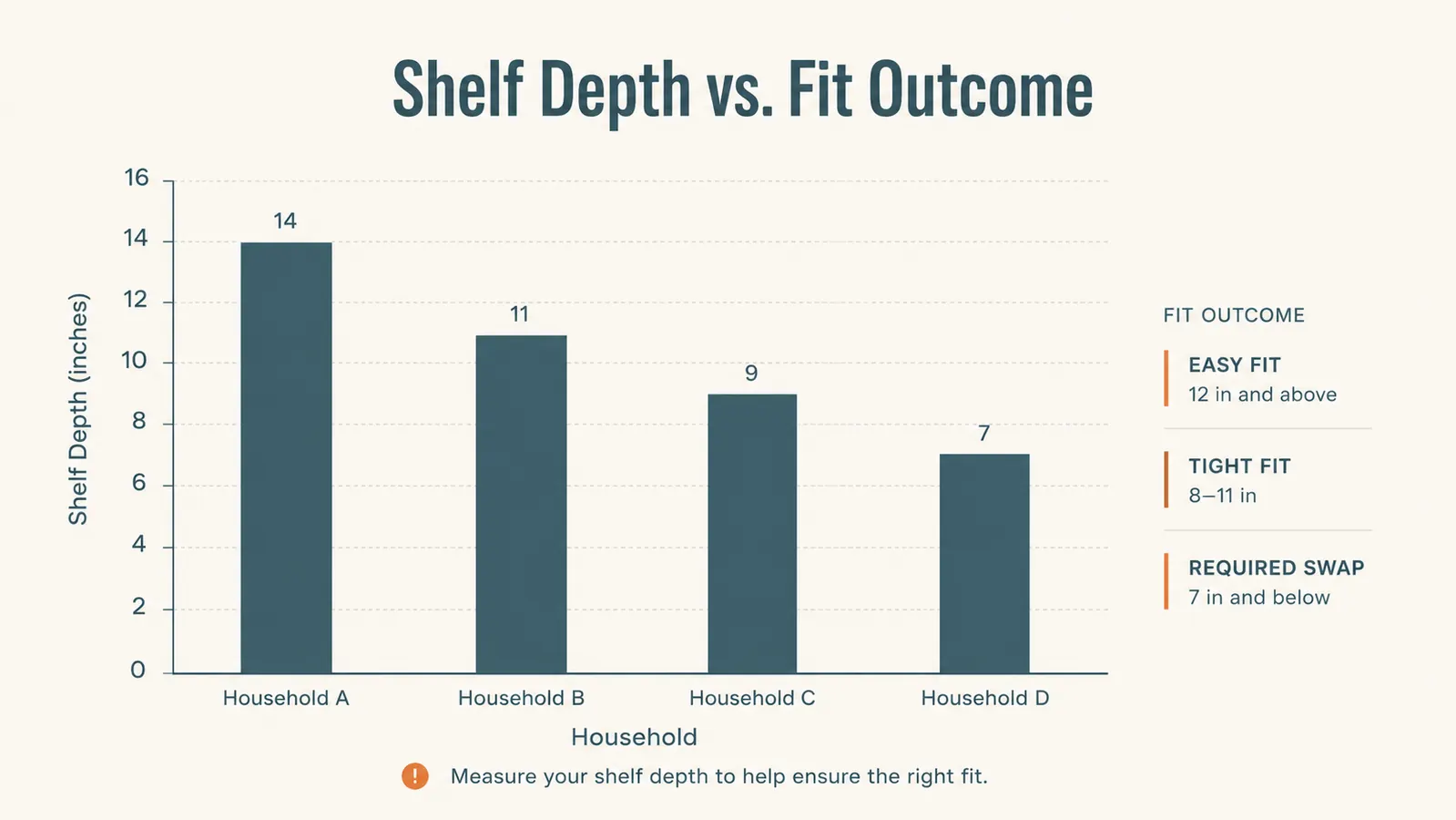
Depth is the number that trips up the most people, and it's the one the listing barely addresses. Most kitchen cabinets and pantry shelves run somewhere between 11 and 16 inches deep, but plenty of older builds, especially anything from before the 1980s like Marisol's, run shallower than that. Her shelves measured just under 12 inches, and once you add the half inch or so the handle needs to clear the door frame, the YIHONG bins were sitting flush against the door when it swung shut. We didn't catch that until the door wouldn't latch. It's an easy thing to miss because most of us measure shelf width and never think to measure the door swing clearance behind it.
Width is the forgiving dimension. All four households fit two bins side by side across a standard 24 inch shelf, with a little room left for a third narrower item like a spice rack or a small jar. If your pantry problem is a shelf that's already wide and shallow, width won't be your issue. Depth, and the extra clearance the handles need, is where I'd spend five minutes with a tape measure before you order.
The Lid Question, and My Honest Workaround
These bins don't come with lids, and that surprises almost every client I've installed them for, because the product photos on Amazon show a mix of lidded and open bins in the same lineup, which makes it easy to assume you're getting one or the other by default. You're not. What you get is six open top bins, and if you want lids, YIHONG sells them separately, and they're not a universal fit across every seller's version of this bin, so double check before you order a lid set on faith.
For Deacon, whose garage pantry holds backup groceries that sit for a month or two between grocery runs, the lack of lids was a real problem. Without a seal, his flour and rice bins picked up a faint garage smell within a few weeks, something none of my other three test households noticed in a kitchen environment. His workaround, which I'd recommend to anyone storing bulk goods somewhere less climate controlled than a kitchen, was moving flour, rice, and cornmeal into separate screw top jars and reserving the open bins for items with their own packaging, like granola bars, juice pouches, and snack bags that don't need a second layer of sealing.
For Marisol and Ingrid, both of whom use their bins in an active kitchen where contents get used up within a couple of weeks, the missing lid was barely worth mentioning. Open access mattered more to them than an airtight seal, since the YIHONG bins get opened multiple times a day. The honest takeaway is that whether the missing lid is a dealbreaker depends entirely on how long the average bin sits full before it gets emptied and refilled, not on the product itself.
Stacking: What the Product Photos Don't Show You
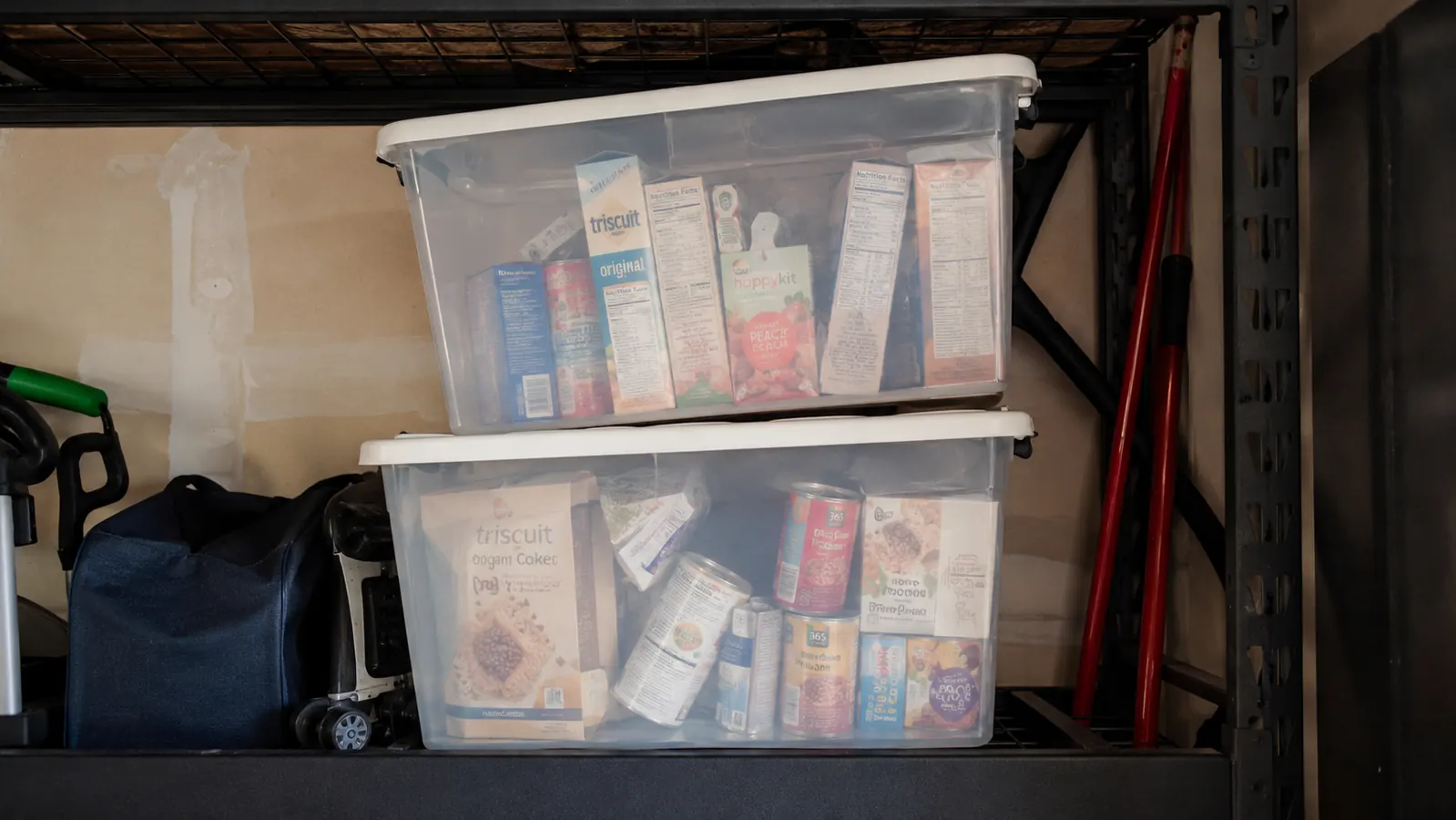
The Amazon listing includes a photo of bins stacked two high, and I understand why. It photographs well and it implies you can double your storage in the same footprint. In practice, across all four households, stacking only worked cleanly when the bottom bin was empty or close to it. A bin filled with rice or flour has a flat but slightly flexible top edge, and a second full bin set on top of it will rock if you don't center it exactly, especially once someone bumps the shelf reaching for something else nearby.
Deacon tried stacking two full bins in his garage pantry to save space, and within about six weeks the top bin slid off during a reach for something on a lower shelf, spilling roughly two cups of rice across his garage floor. Nobody got hurt and nothing broke, but it was the kind of near miss that made him rework his shelving instead of trying to stack again. The bins aren't designed with a locking or interlocking base, so any stack you build is really just balance, and balance doesn't hold up well once kids, pets, or a hurried adult are involved.
What worked better in every household that tried it was staggering bins side by side on two separate shelves rather than stacking them vertically on one. It uses more vertical pantry space overall, but it removes the wobble risk entirely, and none of my four test households had a spill or a near miss once they switched to that layout.
Ingrid's corner cabinet told the opposite story. Her wire shelving runs a full 15 inches deep with plenty of headroom between shelves, so she never even considered stacking, there was no need to. She keeps her six bins spread across two shelves, three per row, and eight months in she hasn't had a single wobble or spill. I bring her up because it's tempting to read Deacon's near miss and assume the bins themselves are unstable. They're not. A full bin sitting on its own shelf, with nothing balanced on top of it, is completely steady. The instability only shows up the moment you try to make one bin do the job of two by stacking them.
What I'd Buy Instead If This Doesn't Fit Your Shelf
If your shelves run shallower than 12 inches, or your pantry door swings tight against the shelf like Marisol's did, this specific bin size isn't the right fit, and buying it anyway just means measuring twice and returning once. YIHONG and other brands sell shorter, shallower bins in the same clear plastic style, and I'd rather point a client toward the right size the first time than sell them on a six pack that photographs the same but won't physically close the door.
If your real issue is corner cabinet dead space or a lazy susan setup that's stopped working for your household, bins aren't always the fix at all. I put together a full side by side comparison of this exact bin set against turntable style organizers at pantry storage bins vs. lazy susan turntables, which walks through which layout suits a deep corner cabinet versus a narrow reach in pantry like the ones most of my clients actually have.
For households specifically worried about bulk goods and pest sealing, like Deacon's garage setup turned out to be, I'd skip this six pack entirely and look at containers built around a locking or screw top lid from the start, even if it costs a bit more per bin. Open bins solve a different problem than sealed storage, and no amount of clever workaround fully closes that gap.
What I Liked
- Clear plastic that holds its shape and doesn't yellow, confirmed across four different households
- Cutout handles make pulling a full bin off the shelf manageable for most hands
- Priced low enough that sizing mistakes don't sting the way a custom system would
- Works well for anything used up within a couple of weeks of opening
- Side by side layout on separate shelves solves storage without any stacking risk
Where It Falls Short
- No lids included, and the separate lid set isn't a guaranteed fit
- True footprint with handle clearance runs tighter than the listed dimensions suggest
- Stacking two full bins is genuinely unstable, despite the product photos
- Shallow shelves under 12 inches deep can cause the pantry door not to latch
Every return I've helped a client process on this set came down to five minutes they didn't spend with a tape measure. The bins themselves never let anyone down. Their shelf did.
Who This Is For
These bins are the right call for a kitchen or pantry with shelves at least 12 inches deep, ideally closer to 13 or more once you account for handle clearance, where the contents get used up and refilled within a few weeks. If you're organizing snacks, pasta, rice for weekly cooking, or baking basics that don't sit untouched for months, the open top design is an advantage, not a limitation. It's also a solid pick if you want to test a bin system without committing to a full pantry overhaul, since nothing here requires permanent shelving changes, and the price makes a sizing mistake a minor inconvenience rather than an expensive one.
Who Should Skip It
Skip this set if you haven't measured your shelf depth and door swing yet, full stop. That single step prevents almost every bad outcome I've seen with this product. Skip it too if you're storing bulk goods somewhere without climate control, like a garage or a basement, where an open top bin won't protect contents from smell, humidity, or pests the way a sealed container will. And skip the idea of stacking these to save space. The photos suggest it works. Four households and one spilled bag of rice later, I can tell you it doesn't hold up once the bins are actually full.
Measured Your Shelf? Then These Are Worth the Twenty Four Dollars
Once you know your shelf clears 12 inches deep and you're not trying to stack them, this six pack does exactly what it promises for less than most families spend on takeout in a week.
Amazon Check Today's Price on Amazon →