
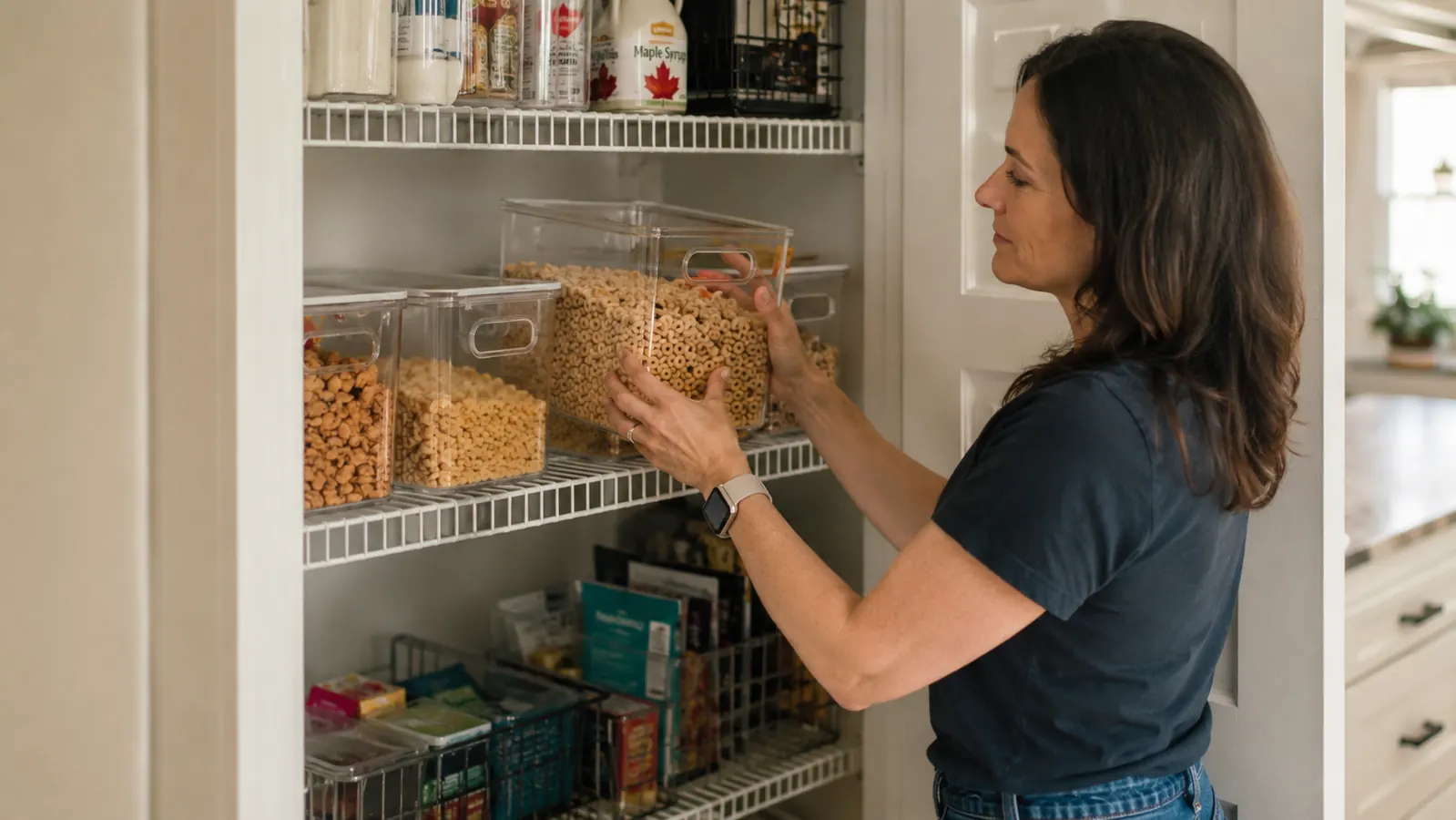
Nine months ago I stood in our pantry with a box cutter in one hand and a six pack of YIHONG clear storage bins in the other, and I told my husband Gavin I'd give them until spring before I decided whether they earned their shelf space. That is usually how it goes with organizing products in my house. Half of what gets pitched to me as a professional organizer looks great in a photo and then sags, cracks, or turns cloudy within a season. Our pantry is a narrow 1970s reach in closet with wire shelving, and it holds snacks for two kids, cereal for a household of five, and Gavin's protein powder collection that never seems to stop growing.
I had already tried the obvious fixes. Open bags clipped shut with binder clips that popped loose every time our son Otis grabbed pretzels before soccer practice. A mismatched shelf of old Cool Whip tubs and hand me down Tupperware that never had a matching lid in the whole stack. I even priced out a custom pantry system through a local company, and the quote for our one closet came back steep. None of that felt right for a pantry that gets opened close to forty times a day by two kids who are seven and ten. So I ordered the YIHONG bins instead, six of them, large size, clear plastic with cutout handles, for a modest price. This is what nine months of real, unglamorous daily use actually looked like.
The Quick Verdict
Sturdy enough for daily grabbing by kids, clear enough that snack negotiations end faster, and priced low enough that replacing one cracked bin down the road doesn't sting. The missing lids are the one real weak point.
Amazon Check Today's Price →Tired of Digging Through Crumpled Bags for the Last Handful of Cereal?
If your pantry shelves look like ours did nine months ago, half opened bags leaning on each other, clips that never quite close, this is the six pack that fixed it without a full remodel.
Amazon Check Today's Price on Amazon →How I've Used These Bins
I did not test these the way a lab would. I used them the way an actual family uses a pantry, unevenly, roughly, and without much patience for anything fragile. The six bins went into rotation in March. Two large ones took over cereal duty, one for the kids' sugary stuff and one for Gavin's bran flakes, which he insists on keeping separate. One became the snack bin, refilled every Sunday with whatever variety pack was on sale that week. One holds baking staples, flour, sugar, and a bag of chocolate chips that never lasts long. The last two rotate between pasta, rice, and whatever produce needs to come off the counter before it goes soft, like onions and potatoes.
Every bin gets handled at least twice a day, usually by small hands that are not gentle with anything. Wren, our ten year old, pulls the snack bin off the shelf most afternoons and does not always set it back down carefully. Otis has knocked the pasta bin onto the kitchen floor at least three times that I can remember, once from the second shelf. I mention this because a lot of storage bin reviews get written after two weeks of careful, adult only use in a showroom kitchen. Ours got the real test, sticky hands, dropped lids, and a dishwasher run roughly every three weeks whether they needed it or not.
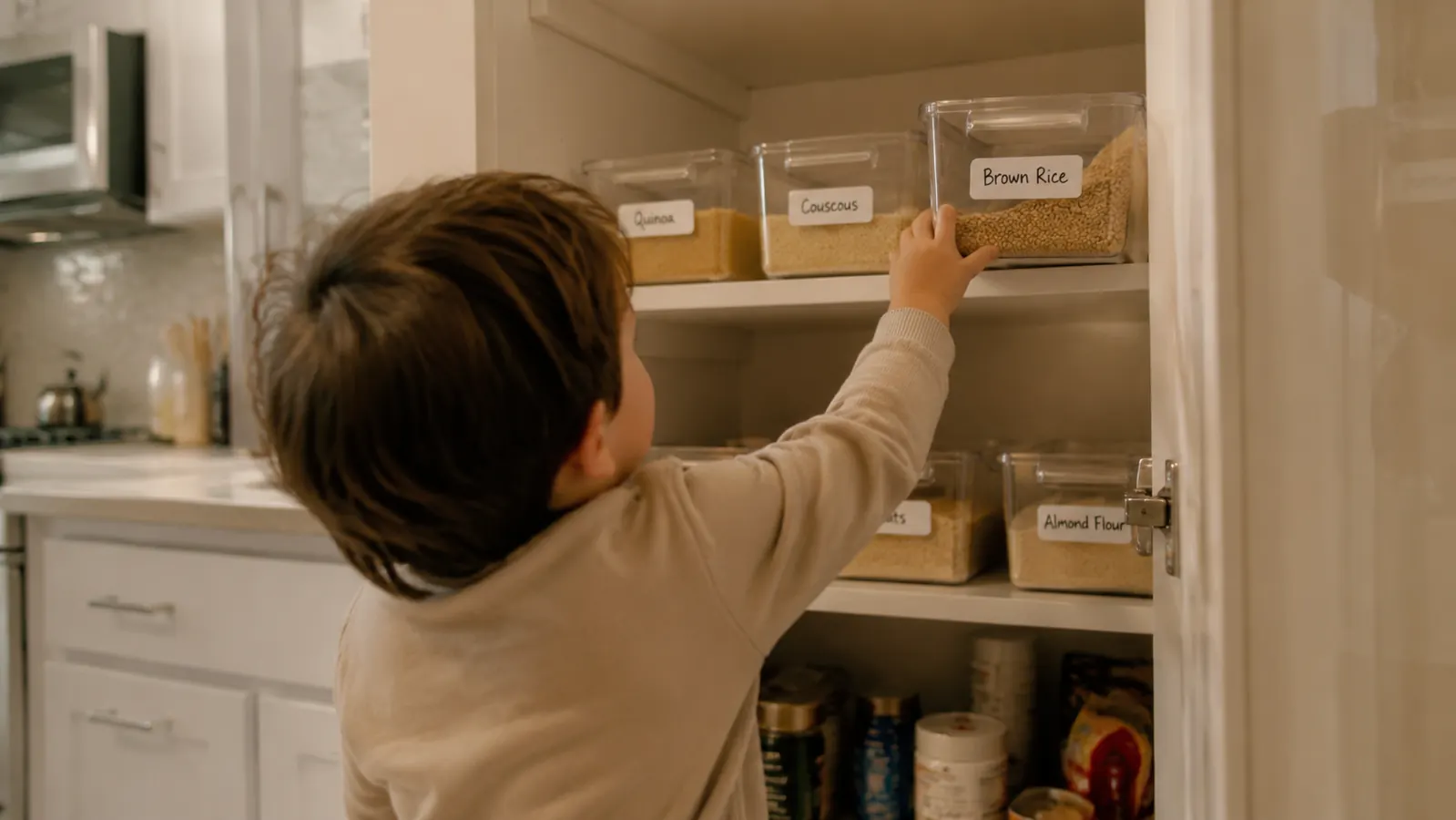
I also didn't baby the labeling. I used a plain white paint pen straight on the plastic for the first month, then switched to a label maker in June once I got tired of the paint pen smearing. Both approaches worked fine on the surface, which matters more than it sounds like it should. A lot of clear bins have a slightly textured or waxy finish that makes labels peel within weeks. These did not have that problem for me.
What's Actually in the Box
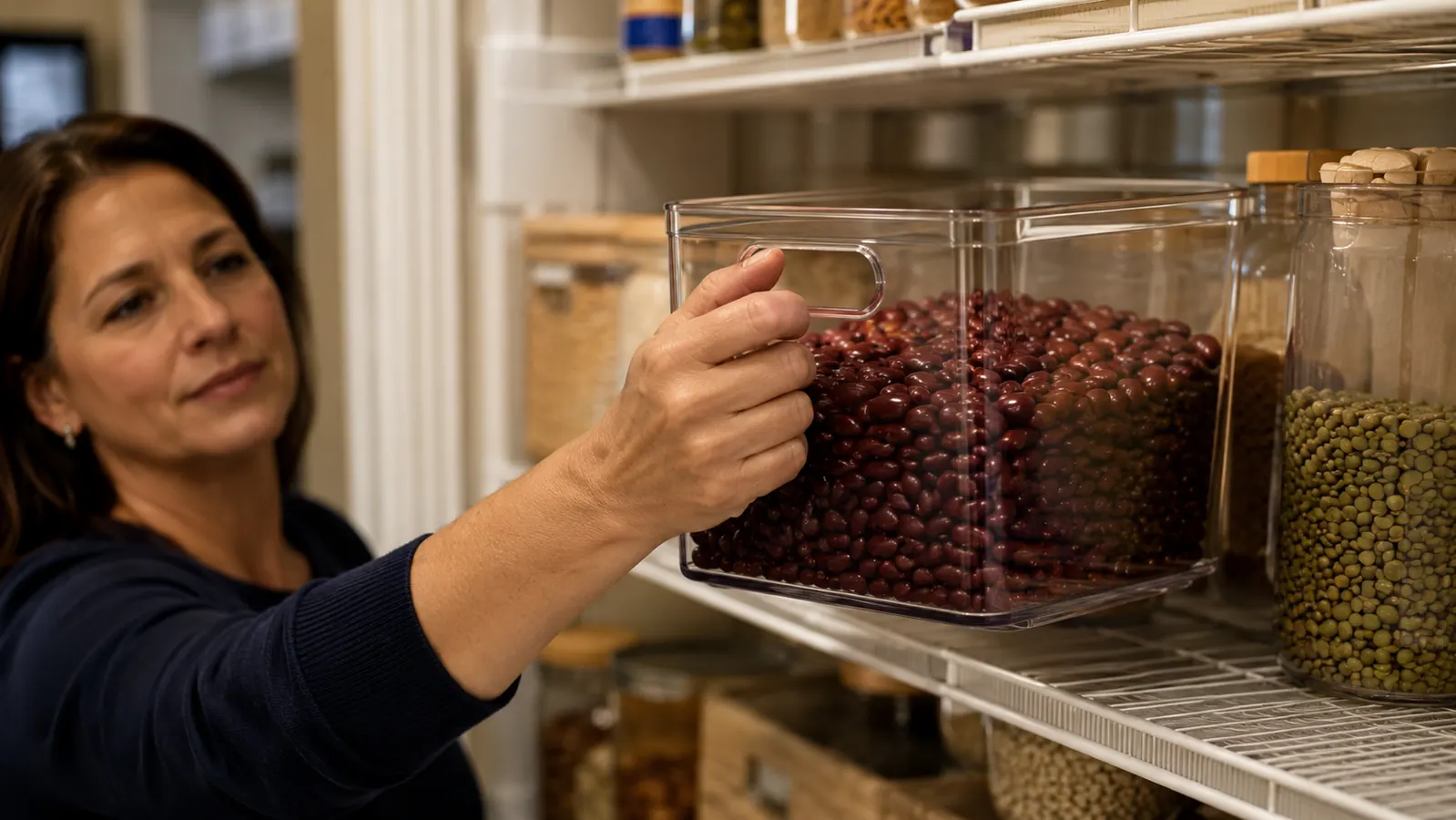
The set is six bins total, all the large size in this particular pack, made of clear, rigid plastic with a cutout handle molded into each short end. There are no lids included, which surprised me when I opened the box, since a lot of the YIHONG pantry bin photos you see online show snap on lids. YIHONG sells a separate lid set, but I never bought one, and after nine months I don't think I need it. More on that in a minute.
The plastic itself is thicker than I expected for the price. It does not have the thin, brittle feel of the dollar store bins I bought and returned two years ago, the kind that cracked at the corner within a month. These have held their shape under real weight. I've had a full bin of rice, which is close to eight pounds, sitting on the same shelf for months without any bowing or sagging in the base.
The handles are the detail I noticed most in month one and still appreciate in month nine. They're cut directly into the plastic rather than bolted on or hinged, so there's nothing to snap off. Wren can hook two fingers through the cutout and pull a full bin toward her without tipping the contents, which was not true of the wire baskets we used before these.
Nine Months In: What Held Up and What Didn't
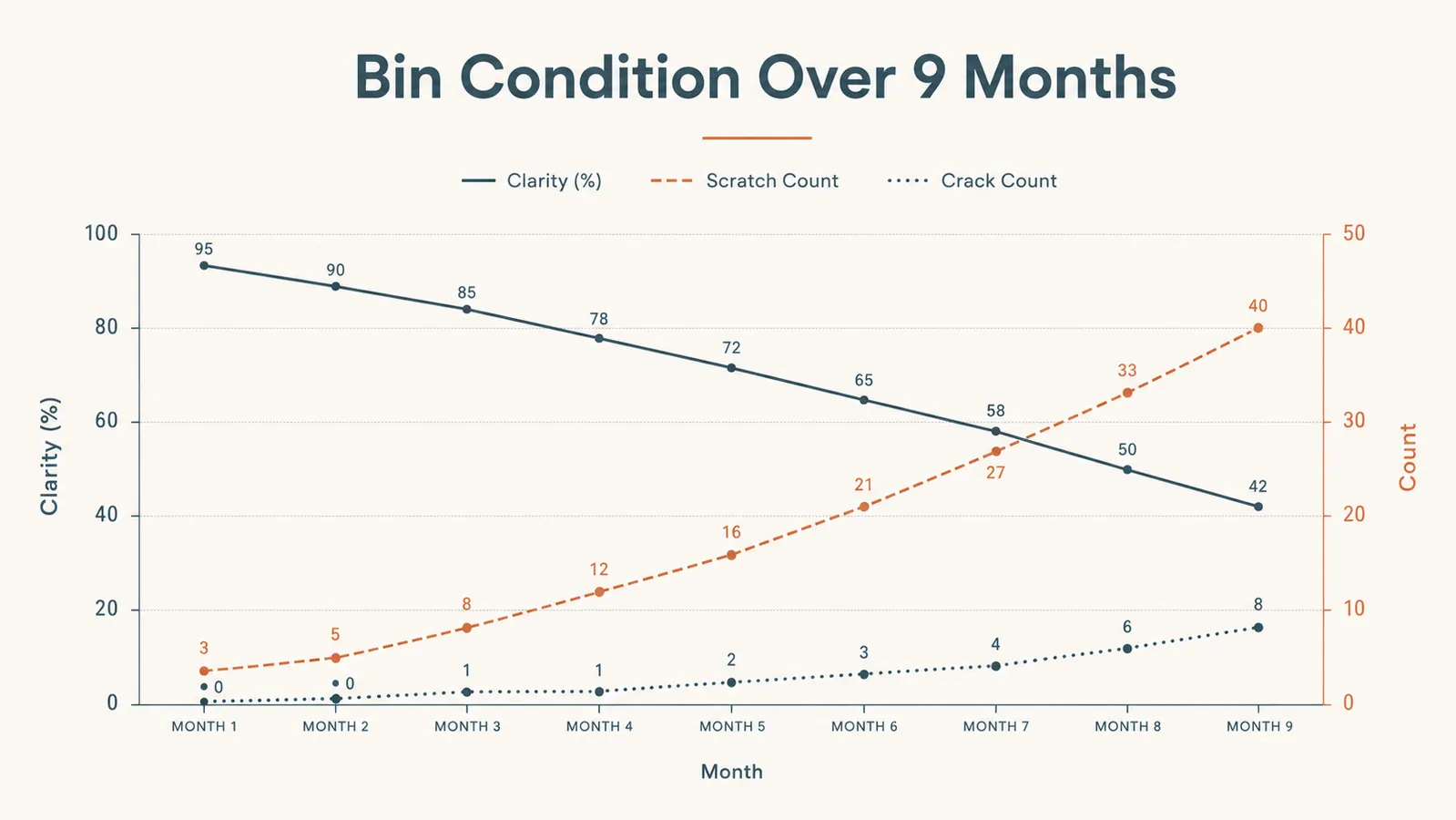
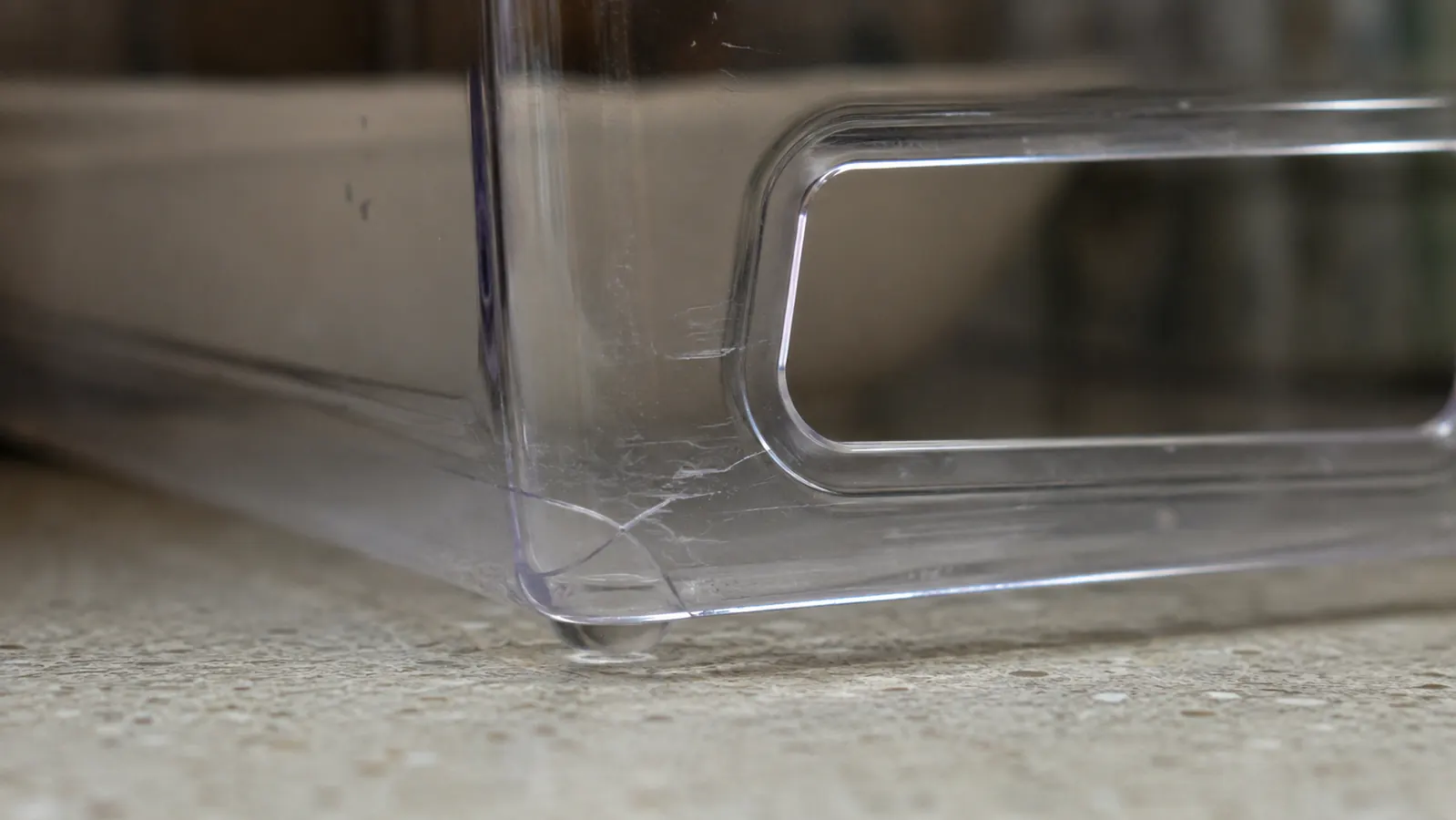
The honest version of a long term review has to include the parts that didn't hold up perfectly, so here they are. Two of the six bins have visible scratches on the bottom from being slid across the wire shelving instead of lifted. That's on us, not the product, but it's worth knowing that the plastic does scuff if you drag it. None of the scratches go through the material or affect function, they're just cosmetic, and you notice them more in bright kitchen light than you'd think.
The clear plastic has stayed genuinely clear, which was my biggest worry going in. A lot of clear bins yellow with age, especially the ones stored near a stove or a sunny window like ours are. Nine months in, side by side with the first photo I took the day I unpacked them, I can't see a meaningful difference in color. That matters more than it sounds, because a cloudy or yellowed bin stops looking organized and starts looking neglected, which defeats the whole point.
Where they've actually surprised me is durability under drops. Otis's three known drops of the pasta bin, one from a real height, produced a single hairline crack near one corner that I only noticed because I was looking for it. The bin still holds pasta without leaking. I wouldn't push my luck and expect that to hold forever, but for a budget six pack, one hairline crack after nine months of being dropped by a seven year old is a result I'll take.
The one place these bins genuinely lose points is storage capacity for oddly shaped items. Tall cereal boxes and family size chip bags don't fit upright in the large size, so I end up laying cereal on its side or leaving the big variety bags in their original packaging on a separate shelf. If your pantry problem is mostly tall boxed goods rather than loose snacks and dry goods, these solve a narrower slice of the problem than you might expect from the marketing photos.
The Tetris Problem Nobody Warns You About
Nobody selling pantry bins tells you about the measuring you have to do first, and I wish someone had told me. My pantry shelves are 12 inches deep, and these bins, once you add the handle clearance, come close to that depth. I had about a quarter inch to spare on each shelf, which meant the bins had to go in a specific order or the shelf door wouldn't close flush. It took me two tries and one annoyed Saturday morning to find the arrangement that worked.
The lack of included lids also means these aren't airtight. For flour, sugar, and rice that get used within a few weeks, that's been fine. For anything you plan to store for months, cornmeal you use twice a year, dried beans in bulk, I'd want a sealed container instead. I've started keeping our long term bulk goods in separate screw top jars and using these bins strictly for the stuff in weekly rotation. It's a workaround, not a flaw exactly, but it's not the all in one solution the product photos imply.
If depth and true airtight sealing matter more to you than open access and easy grabbing, it's worth comparing these against a turntable style system before you buy. We put together a full breakdown at pantry storage bins vs. lazy susan turntables that walks through which layout actually fits a narrow reach in pantry like ours versus a deep corner cabinet.
Bins vs. The Alternatives I Tried First
Before these, I ran our pantry on a combination of the binder clip method and a set of wire baskets left behind by the previous owners. The wire baskets looked fine in photos but were miserable in practice, snack bags snagged on the metal edges, and anything smaller than a granola bar fell straight through the gaps. I gave that setup about four months before I gave up on it entirely.
I also seriously considered a full custom pantry install, pull out drawers, built in bins, the works. The contractor quote was reasonable by custom cabinetry standards, but it was more than ten times what I spent on the YIHONG set, and it would have meant a week without a usable pantry during installation. For a family of five with two kids who eat constantly, that timeline alone ruled it out.
What actually convinced me these were the right middle ground was watching how fast the switch changed daily behavior. Within the first week, both kids started putting snacks back in the bin instead of leaving open bags on the counter, mostly because the bin was easier to grab and easier to put back than wrestling a bag closed. If you want the fuller case for why bins specifically solve more of the daily friction than other systems, I laid out the reasoning in 10 reasons clear pantry bins fix kitchen clutter.
What I Liked
- Held up to nine months of daily use by two kids, including multiple drops
- Plastic has stayed clear with no visible yellowing near a stove and a sunny window
- Cutout handles make pulling a full bin off the shelf easy for smaller hands
- Thicker, sturdier plastic than the dollar store bins I've tried before
- Priced low enough that replacing one damaged bin isn't a big deal
Where It Falls Short
- No lids included, so nothing stored in them is truly airtight
- Tall cereal boxes and family size chip bags don't fit upright in the large size
- Depth can be tight in older, shallower pantry shelving
- Two of six bins have cosmetic scratches from sliding rather than lifting
The switch didn't change how much stuff was in our pantry. It changed how fast my kids could find it and put it back, and that turned out to matter more than I expected.
Who This Is For
These bins make the most sense for households where the pantry gets opened constantly by more than one person, especially if some of those people are kids who won't reliably reseal a bag or find a lid that matches. If your main pantry problem is loose snacks, cereal, pasta, rice, and baking basics that get used up within a few weeks of opening, this six pack solves that cleanly and cheaply. It's also a solid fit if you're renting or not ready to commit to a built in system, since nothing here requires modifying the shelving itself.
Who Should Skip It
Skip these if your pantry storage problem is mostly about long term bulk goods that need a true airtight seal, dried beans, flour you buy in 25 pound bags, anything you're worried about pests getting into. Without lids, these aren't built for that job, and you'd be better served by screw top containers or a bin set that includes a locking lid from the start. I'd also skip these if your shelves are shallower than 12 inches, since the depth runs close to the edge for older pantry cabinets, and you'll want to measure before you buy rather than find out the way I did.
Nine Months In, These Are Still the First Thing I Recommend
For the price of a couple of takeout dinners, this six pack has survived two kids, a dishwasher every three weeks, and a lot of dropped pasta. That's a better track record than most of what I test.
Amazon Check Today's Price on Amazon →