

I ordered this four-pack of Sterilite 56-quart wheeled under-bed bins in February because the reviews looked suspiciously clean, and in my experience a wall of five-star reviews usually means something got left out. Sure enough, three things surprised me in the first ten days, and by month five I had a running list of quirks that never once showed up in a star rating. This is that list. Not a highlight reel, not a takedown, just the stuff I wish someone had told me before the box landed on my porch.
I bought these for our guest room, which doubles as overflow storage for holiday decor and my son Julian's outgrown clothes that my sister Talia keeps asking me to save for her youngest. The guest room has a daybed with a low dust ruffle, which turned out to matter in a way I didn't expect until I was on my knees with a tape measure.
The Quick Verdict
Solid bins with real problems worth knowing in advance, mainly noise on hardwood and a latch that takes two hands, not one.
Amazon Check Today's Price →Before You Order Four of These, Read the Fine Print Nobody Puts in the Listing
These bins are genuinely well built. They're also not a drop-in fix for every bed frame, floor type, or storage habit. Check today's price and the current dimensions listed on the product page before you commit to a four-pack.
Amazon Check Today's Price on Amazon →How I Actually Tested These
I didn't do a quick unboxing and call it a review. I loaded two bins with holiday decorations in early February, right after we packed the tree away, and left them completely untouched under the guest daybed until I pulled them back out in June for a Fourth of July display. The other two bins got Julian's outgrown 5T and 6T clothes, which I rotate in and out roughly every six to eight weeks as Talia comes by to grab a size before her son needs it.
That gave me two very different test conditions in the same room: bins that sat dormant for four months straight, and bins that got pulled out, opened, partially emptied, and pushed back nearly a dozen times. Most reviews only cover one of those situations. I wanted both, because that's genuinely how most households use under-bed storage, some bins get set-and-forget treatment while others are in constant rotation.
I also tested these across two different floor surfaces on purpose. The guest room has original hardwood, original to a house built in 1998, while my own bedroom down the hall has carpet over the same subfloor. Rolling identical loaded bins across both surfaces, back to back, is where the first real surprise showed up.
I weighed a fully packed bin too, mostly out of curiosity about whether the wheels were doing real work. The decor bin, stuffed with a wreath box, string lights, and a stack of table linens, came in at just under 27 pounds on our bathroom scale. That's heavier than I expected to be sliding under a bed by hand, and it's the number that made the wheel noise issue below feel worth writing about rather than dismissing as a minor gripe.
The Wheel Noise Nobody Warns You About
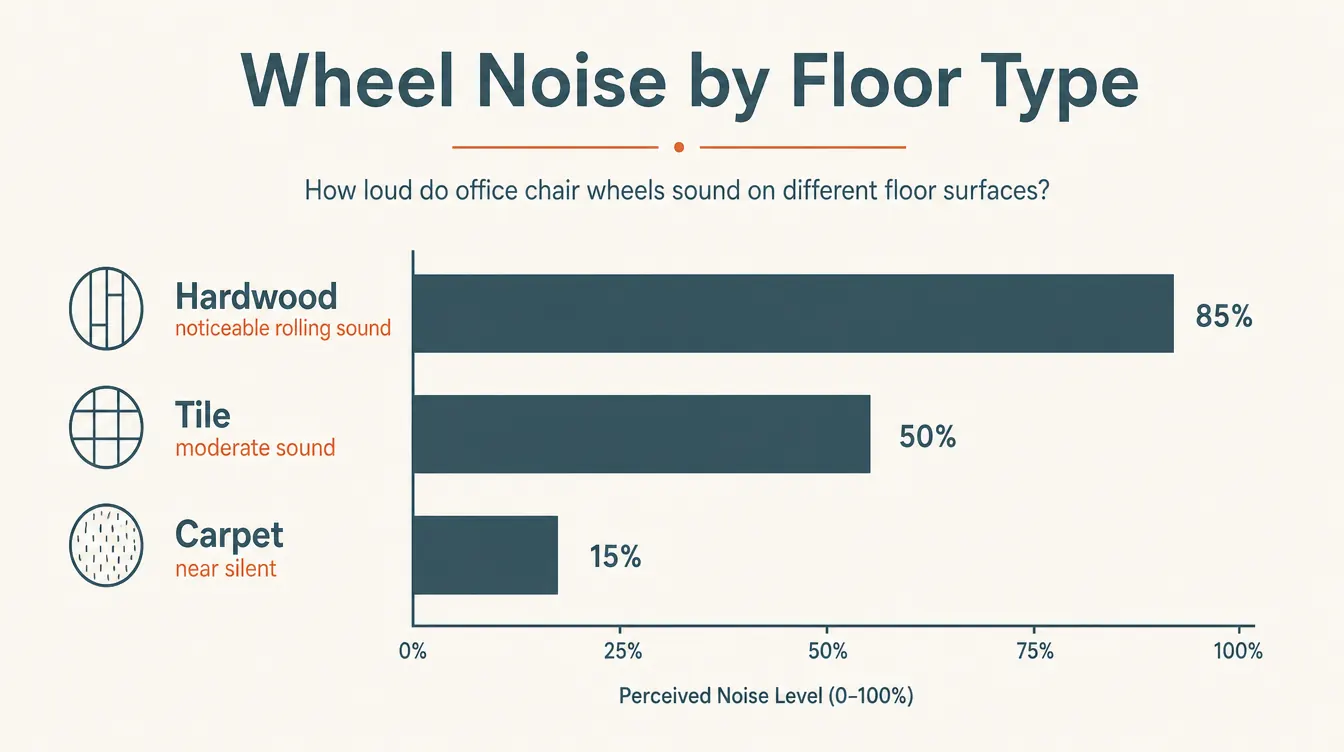
Every review I read before buying praised the wheels, and they should, the caster wheels genuinely make loading and unloading these bins easier than the totes I used before. What none of those reviews mentioned is how loud a fully packed bin sounds rolling across hardwood at 6 a.m. On carpet, you barely hear it, a soft muffled roll. On our original hardwood, a bin loaded with folded linens and a box of ornaments produces a distinct rumble that woke my husband Desmond the first time I grabbed something before sunrise.
It's not a dealbreaker, but it's worth knowing if your bedroom shares a wall with someone who sleeps light, or if the room sits directly above a downstairs bedroom like ours does. I've since made a habit of only pulling bins on hardwood during daylight hours, which is a workaround, not a fix. If your under-bed storage lives on carpet exclusively, you can skip this concern entirely. If it's going under a bed on hardwood, tile, or laminate, plan on some noise and time your errands accordingly.
I tried a few things to quiet it down. Felt furniture pads under the wheels helped marginally but wore through within a month of regular use and needed replacing. A cheap rug remnant tucked just under the bed's footprint worked better and lasted longer, but it's an extra purchase and an extra step that no listing mentions you might need.
The Locking Casters Are Pickier Than They Look
Two of the four wheels on each bin are labeled as locking casters, and I assumed that meant they'd hold the Sterilite bin still the moment it stopped rolling. They don't work that way. Each locking wheel has a small tab you flip down by hand, and on our guest room's slightly uneven original hardwood, one of the four locking tabs across our set doesn't fully catch unless the Sterilite bin is sitting exactly square to the floorboards. Nudge it and it drifts an inch.
It matters less than it sounds like it should, because a bin living under a bed isn't going anywhere on its own regardless. Where it actually mattered was the one time I used a bin temporarily in the hallway while reorganizing the guest room closet, and it rolled a few inches on its own when Julian brushed past it running for the bathroom. If you're planning to use these anywhere outside of parked under a bed frame, don't assume the lock is doing more than light resistance.
I also learned to flip the lock tabs down before sliding a bin fully into place rather than after, since reaching a hand under a low daybed to flip a tab once the Sterilite bin is already pushed back is genuinely awkward. That's a five-second habit once you know to do it, but nothing in the packaging suggested locking before pushing rather than after.
The Latch Quirk That Took Me a Week to Notice
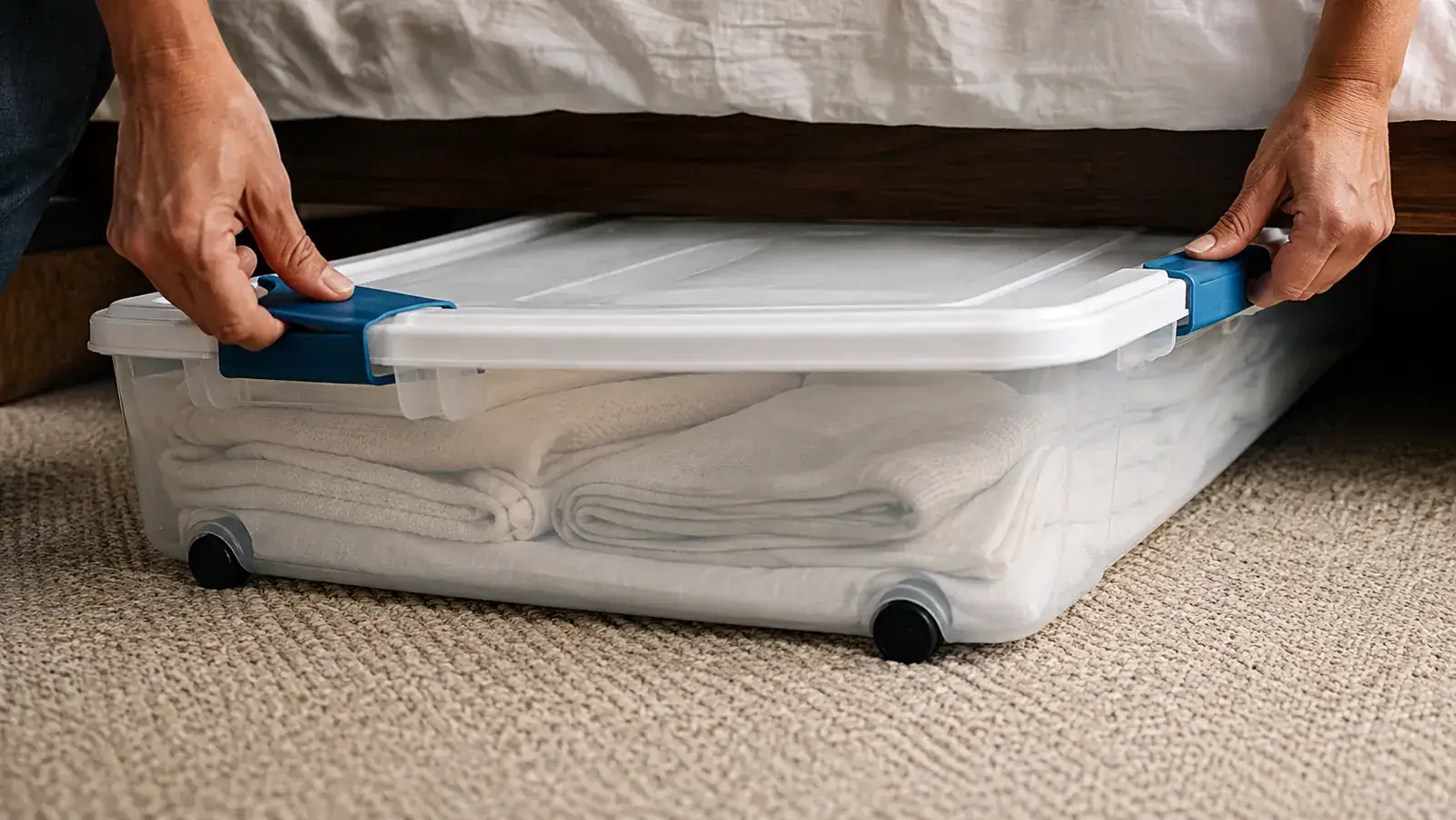
The latches are genuinely sturdy, that part of the marketing is accurate. What surprised me is that they're designed to be pressed down at both ends more or less simultaneously to seat properly. Press one side down first and walk away, and the opposite latch will look closed from a glance but pop open if the Sterilite bin gets nudged or tilted, which happened twice with our decor bin before I figured out the pattern.
It sounds like a small thing, and it is, but it means these aren't quite a one-handed, grab-and-go bin the way I expected from the product photos. I now close them with both palms flat, one on each end, pressing down together. Once you know the trick it takes two seconds. Nobody tells you the trick exists until you've had a lid pop open on a bin full of glass ornaments.
The upside is that once both latches are properly seated, they hold. Julian's clothes bin has been pulled out and reloaded probably fifteen times since February and the latches show no cracking, no looseness, nothing that suggests they're wearing out. It's purely a technique issue, not a durability one, but it's the kind of thing a five-star review skips because the reviewer figured it out on day one and forgot it was ever confusing.
56 Quarts Sounds Bigger Than It Actually Is
On paper, 56 quarts sounds like a lot of storage, and compared to a standard laundry basket it is. In practice, once you factor in that clothes and linens need to lie reasonably flat to close the lid without straining the latches, the usable capacity is noticeably smaller than the number implies. I fit roughly two winter sweaters' worth less than I expected when I first packed the decor bin, mostly because bulky items like a wreath box or a stack of wrapping paper rolls eat vertical space fast in a bin that's only about 8 inches tall.
Folding technique matters more with these than it did with the taller totes I used previously. Anything rolled instead of flat-folded, sweaters, extra bedding, wastes real space and can keep the lid from seating flush, which then stresses the latches over time. I've had to re-fold Julian's clothes bin twice just to get the lid flat again after Talia repacked it in a hurry.
If you're buying these expecting to fit exactly what the quart rating implies compared to a taller bin you've used before, adjust your expectations down slightly, or plan on flat-folding everything rather than rolling. It's a workable bin, just not quite as roomy as the number on the box suggests.
The Clearance Math Goes Beyond Frame Height
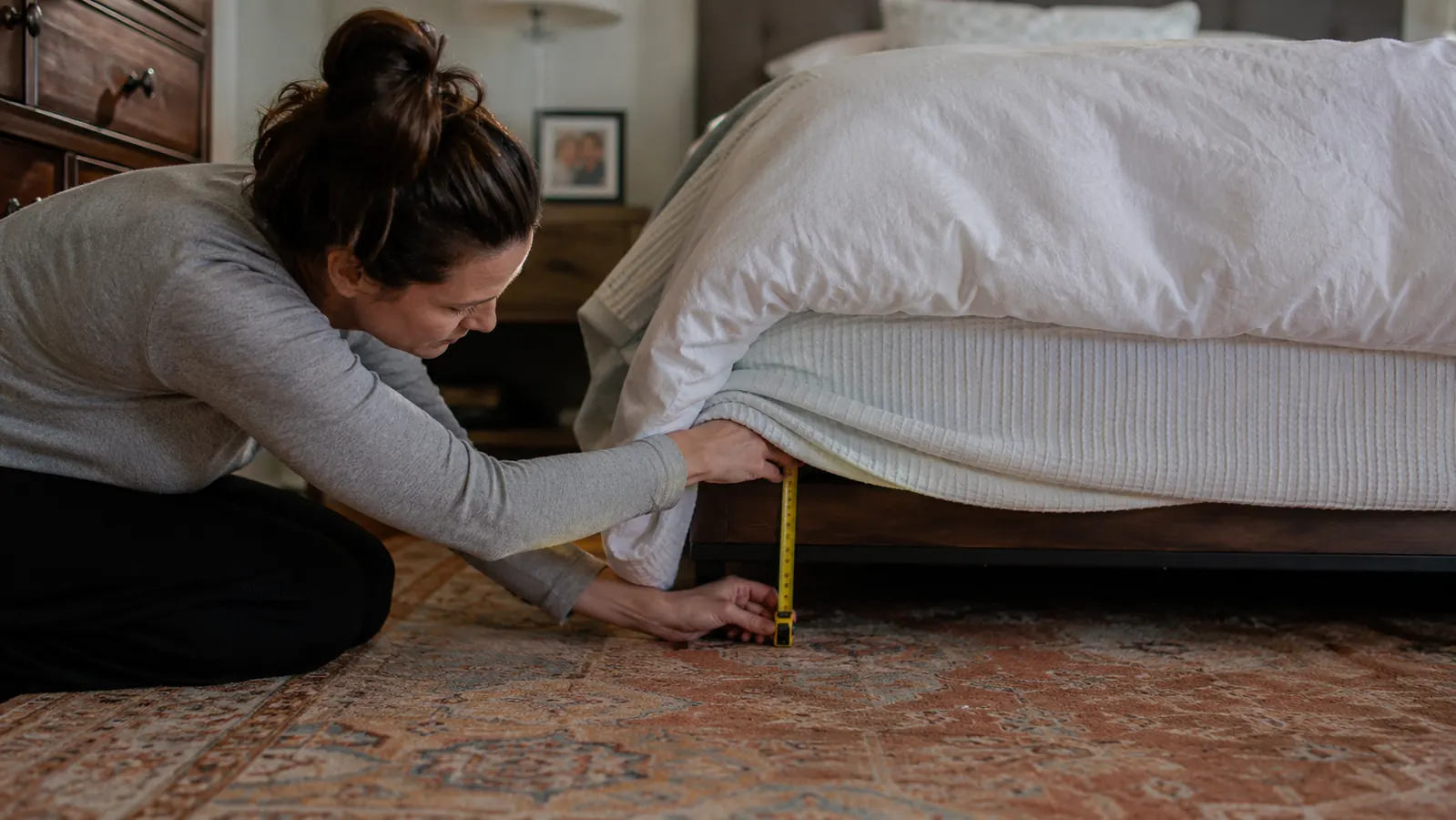
Most advice about under-bed bins stops at measuring your frame's leg height, and that number matters, but it's not the whole picture. Our guest daybed technically has enough leg clearance on paper, yet the dust ruffle skirting the frame hangs low enough that a fully loaded bin catches the fabric on the way in, dragging it slightly askew every time. Nobody warned me that a dust ruffle, not the frame itself, would be the actual obstacle.
The fix was simple once I identified the problem, I tucked the ruffle's hem up along the frame with a few strips of fabric tape, but that's a step I only discovered after weeks of straightening a crooked bed skirt every time I pulled a bin out. If your bed has any kind of skirt, valance, or fabric trim near the floor, check how it hangs before you assume frame height alone tells you whether these will fit cleanly.
Storage headboards and frames with built-in drawers are the other clearance trap. A friend of mine has a platform frame with drawers built into the base on one side, which meant only three of her four bins actually fit, the fourth had to go in a closet instead. Trundle beds have the same issue from a different direction, the trundle frame itself can eat most of the usable width even when the height clears fine. Measure every side of the frame separately if yours isn't a simple four-legged design, because clearance isn't always uniform around the bed.
New Plastic Smell and the First 48 Hours
All four bins arrived with a fairly strong new-plastic smell that I hadn't seen mentioned anywhere before buying. It wasn't unpleasant exactly, but I wouldn't have packed clean linens straight into them the way I originally planned. I left all four open in the garage for two days with the lids propped, and the smell faded to nearly nothing by the time I loaded them.
There was also a light powdery residue inside each bin, the kind that comes off a fingertip if you run it along the bottom, which I assume is left over from the molding process. A quick wipe-down with a damp cloth before the first use took care of it in under a minute per bin, but it's another small step the listing doesn't mention and one I wouldn't have thought to do if I hadn't noticed it by accident.
If you're planning to use these for anything you're sensitive to smell around, bedding, baby clothes, anything going straight against skin, build in that 48-hour airing-out window and a quick wipe-down before your first use. It's a minor step, but skipping it means your first few weeks of storage come with a faint plastic scent that transfers a little to soft items packed inside.
What I Liked
- Latches hold securely once you learn to press both ends down together
- Clear sides make it easy to spot the right bin without opening every lid
- 56 quarts genuinely fits a full seasonal rotation when items are flat-folded
- No assembly required, functional straight out of the box after airing out
- Handles repeated loading and unloading well over five months of real rotation
Where It Falls Short
- Wheels are noticeably loud rolling across hardwood or tile, quiet on carpet
- Locking casters need to be flipped down by hand before pushing the bin into place, not after
- Latches can look closed while only one side is properly seated
- Usable capacity runs smaller than 56 quarts once you account for lid clearance
- Dust ruffles, bed skirts, and trundle frames can catch on the bin even when height clears
- Strong new-plastic smell and a light powdery residue out of the box that need a quick clean-up
None of these quirks are dealbreakers on their own. Stacked together, they're the difference between a bin that just works and one you have to learn to work with.
Who This Is For
These bins make the most sense for households storing things on a rotation, seasonal decor, kids' hand-me-down sizes, off-season shoes, where you'll be opening and closing the lids regularly rather than sealing them shut and forgetting they exist. If your bedroom or guest room floor is carpeted, the noise issue disappears entirely and these become close to ideal. They're also a good match if you already flat-fold your linens and clothes rather than rolling them, since that habit sidesteps the capacity quirk almost completely, and if your bed frame is a plain four-legged design without a skirt, the clearance math stays simple.
Who Should Skip It
Skip these if your bedroom sits above or beside a room where early-morning or late-night noise is a real problem and your floor is hardwood, tile, or laminate. Skip them too if your bed has a low-hanging dust ruffle, valance, a trundle, or a frame with built-in drawers on one or more sides, since the clearance math gets more complicated than a simple leg-height measurement. And if you tend to roll clothes rather than fold them flat, you'll find the usable capacity tighter than the 56-quart label suggests. For a full breakdown of how these compare against soft collapsible storage on durability and dust protection, I covered that separately in our comparison of rigid wheeled bins against soft storage bags, and if you want the long-view on how a set holds up after nearly a year of daily use, that's in our ten-month review of these same bins.
Know the Quirks, Still Want the Bins? Here's Where to Check Current Pricing
Every product has tradeoffs. These happen to be ones most reviews skip past. If a rotating seasonal storage bin on a mostly carpeted floor sounds like your setup, this is still one of the sturdier options out there. See today's price and availability before you decide.
Amazon Check Today's Price on Amazon →