
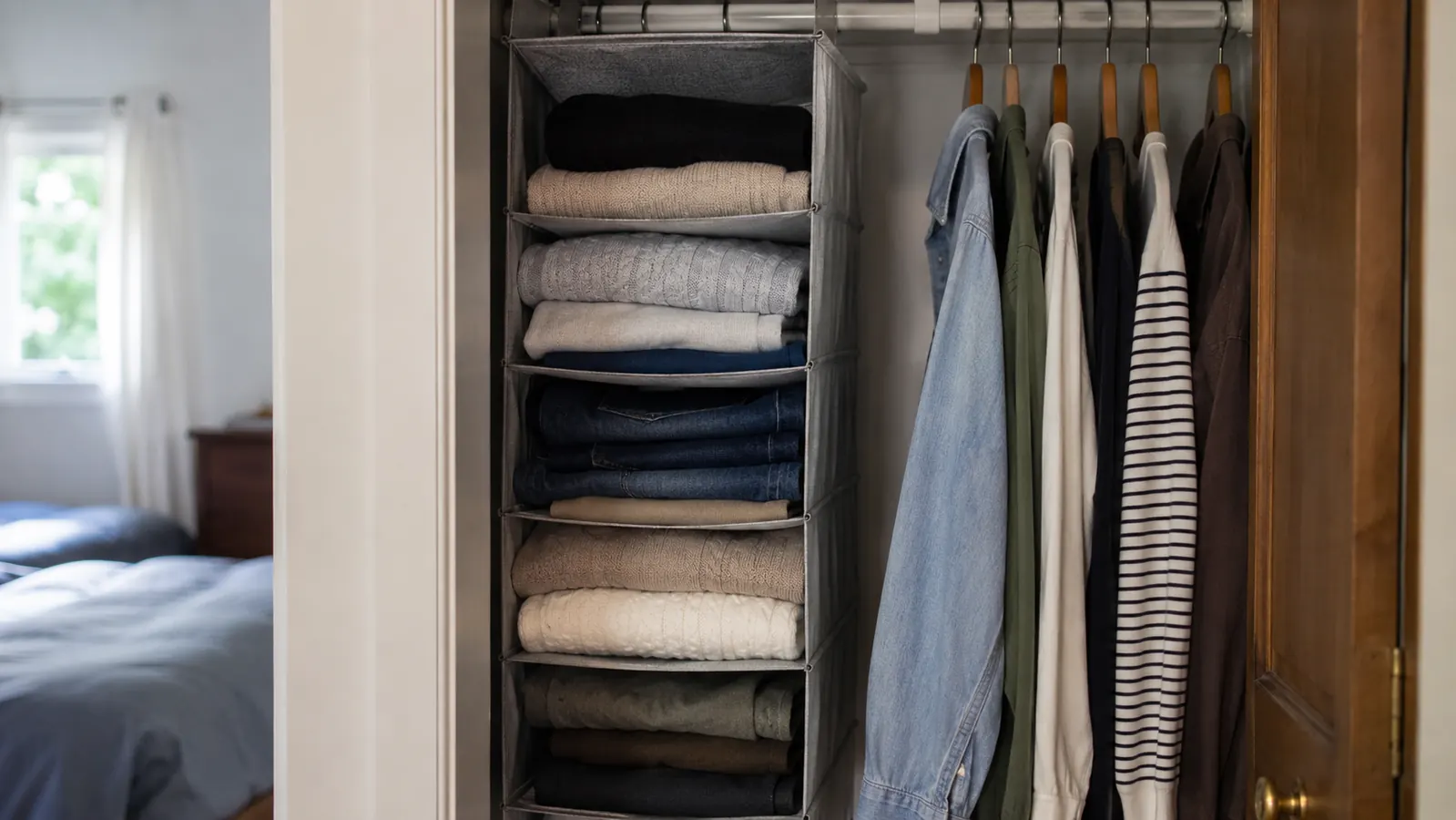
My neighbor Priya texted me a photo of a steep quote before she ever texted me a photo of her actual closet. A local closet company had come out to measure her linen closet, a narrow reach-in off the hallway of her rental, and handed her a proposal for built-in shelf dividers before she'd even decided the closet needed that much help. She's a renter. She wasn't drilling anything into that wall without her landlord's blessing, and she wasn't spending that kind of money on a closet she might move out of in a year. I told her to hold off on the contractor and try the Simple Houseware 5-Shelf Hanging Closet Organizer first. It clips over the existing rod in about four minutes, no tools, no landlord conversation required. Eighteen months later, it's still hanging in that linen closet and she never called the contractor back.
That's the real question most people are actually asking when they search for hanging organizer versus shelf dividers: do I need to spend real money and commit to a permanent change, or is there a faster, cheaper fix that gets me 90 percent of the way there. The short answer, after installing both kinds more times than I can count in other people's closets: for a small or medium closet used by one or two people, the Simple Houseware hanging organizer wins on cost, speed, and flexibility almost every time. Shelf dividers earn their keep in a specific situation, which I'll get to, but they are not the default answer for most households, and the pitch that they are is mostly coming from people who sell shelf dividers.
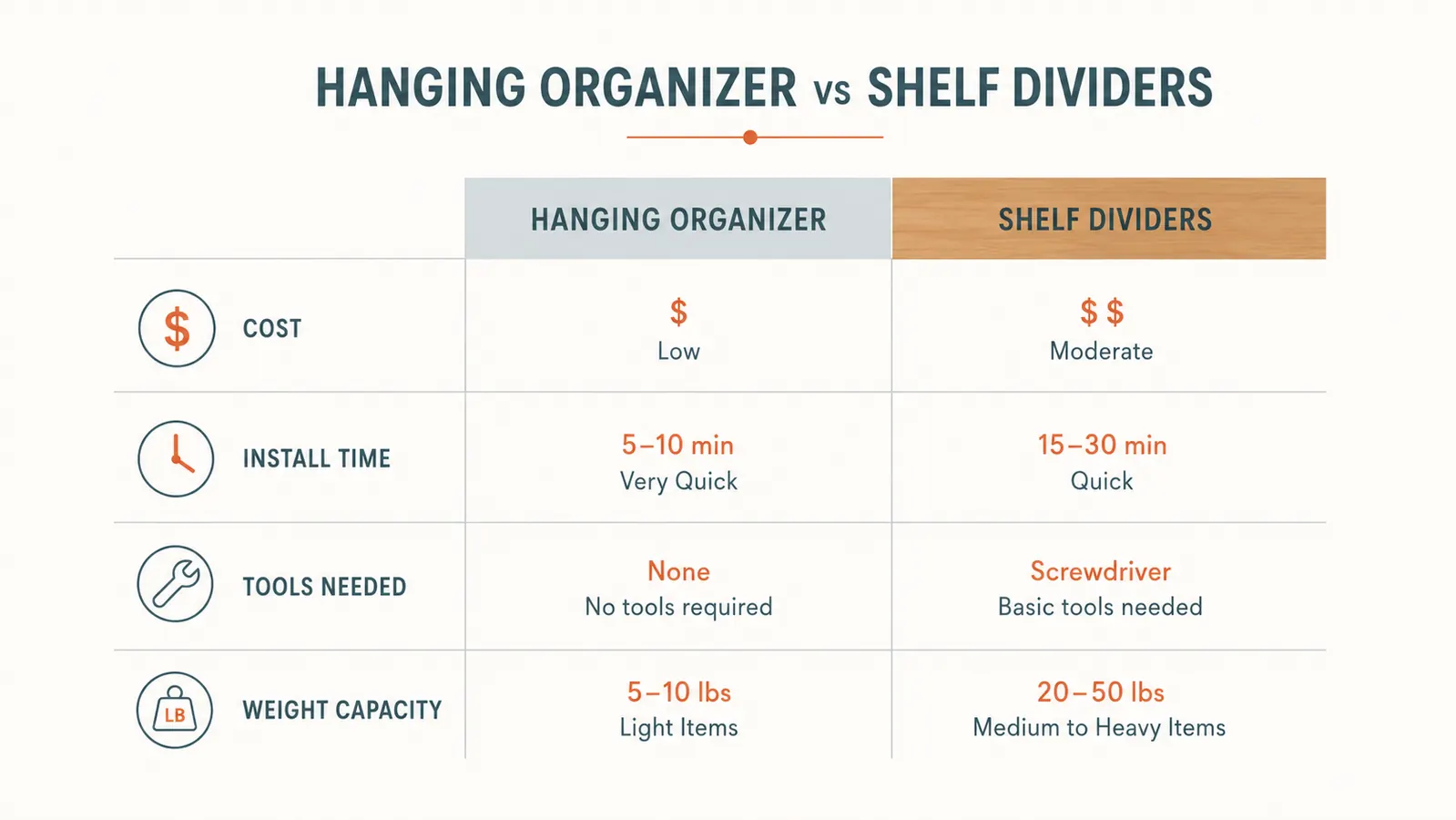
| Hanging Closet Organizer | Closet Shelf Dividers | |
|---|---|---|
| Typical Cost | Budget-friendly for the unit | Wide range depending on installation |
| Install Time | 4-6 minutes, no tools | Half a day to a full day, often a contractor visit |
| Tools or Drilling Required | None, clips over existing rod | Drill, level, wall anchors or track system |
| Renter-Friendly | Yes, fully removable | No, semi-permanent installation |
| Portability | Moves with you, reusable in any closet | Built for this closet's exact dimensions only |
| Weight Per Shelf | Around 10 lbs per shelf, sweaters and folded items | 20-40 lbs per shelf, depending on system |
| Look and Feel | Fabric, casual, hangs freely | Solid wood or laminate, built-in appearance |
| Adjustability | Fixed shelf spacing, cannot reconfigure | Often adjustable shelf heights and widths |
| Best For | Renters, small closets, quick fixes, dorms | Owned homes, long-term storage rooms, heavy loads |
Where the Hanging Organizer Wins
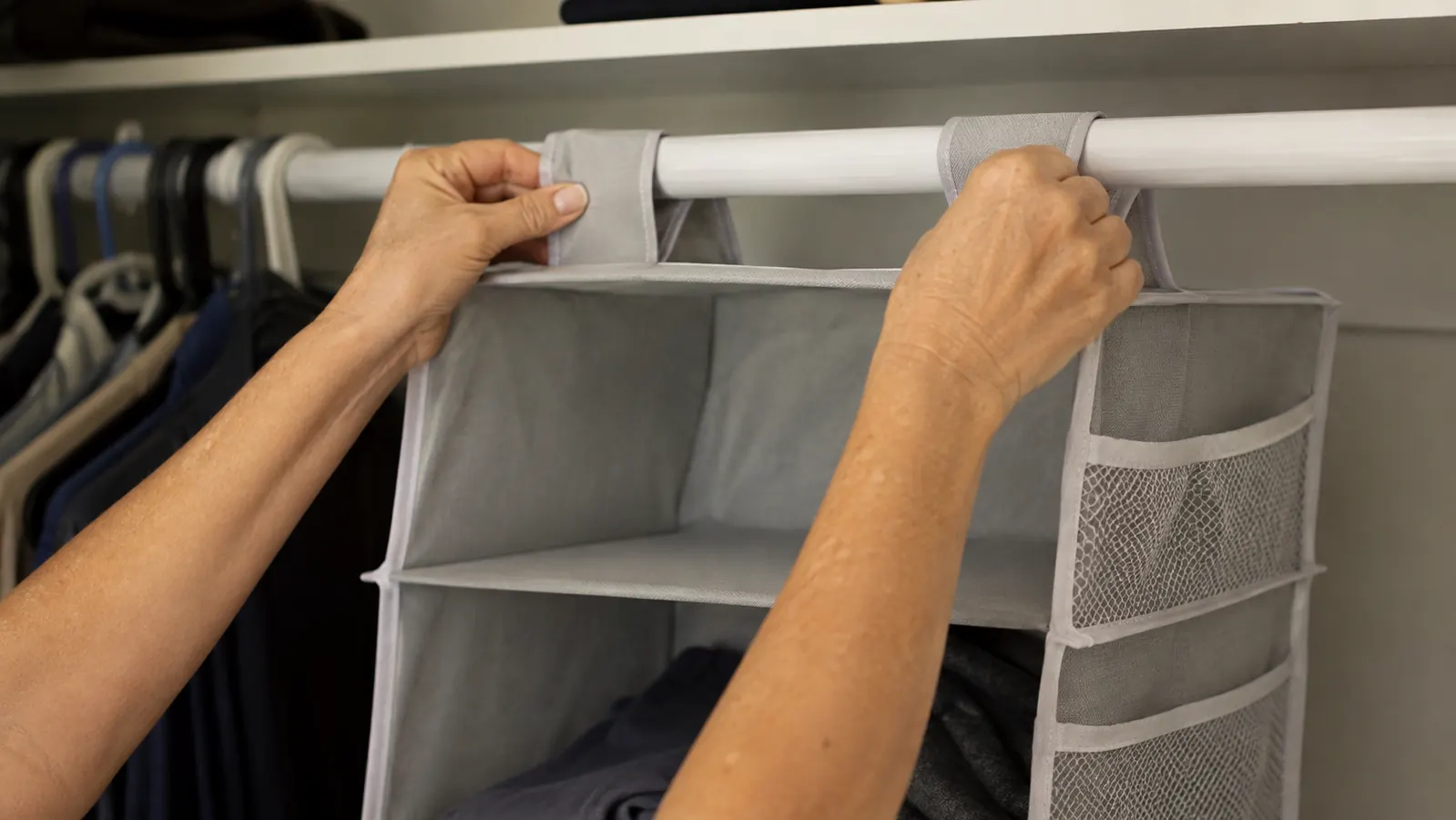
The single biggest thing the Simple Houseware hanging organizer has going for it is that it doesn't ask anything of your closet. It clips directly onto the rod that's already there, so there's no drilling, no stud finder, no patching holes when you move out. I've hung this exact organizer in a college dorm closet, a 400-square-foot studio apartment, and a spare bedroom closet that was maybe 30 inches wide, and it fit and worked in all three because it doesn't care about your closet's specific dimensions the way a built-in system does. If you rent, this alone settles the argument. My own daughter used one through two apartment moves in college and just unclipped it and folded it flat for the drive each time.
Cost is the other obvious win, but the gap is bigger than people expect going in. At its current price, the Simple Houseware organizer runs budget-friendly. A basic wire shelf divider kit from a hardware store, installed yourself on a Saturday, might run mid-range in materials. A contractor-installed wood shelf system, the kind Priya was quoted, routinely lands in the premium range for a single reach-in closet, more for a walk-in. That's not a small gap. For most households, spending minimal money to solve a sweater-and-jean storage problem that a premium system would also solve is not a close call, especially when the budget version works within the hour and the premium version means living out of laundry baskets for a few days while someone's on your calendar.
It also holds up better over time than people assume from a fabric organizer. I've had mine in a guest room closet for close to two years now, loaded with folded towels and off-season sweaters, and the shelves haven't sagged or torn at the seams. The canvas has held its shape through two moves and a lot of grabbing and yanking from a toddler who likes to pull things off the bottom shelf. For anyone weighing whether a fabric organizer is durable enough to bother with, I go into more detail on exactly what held up and what didn't over eight months of daily use in my full long-term review of this organizer.
Where Closet Shelf Dividers Win
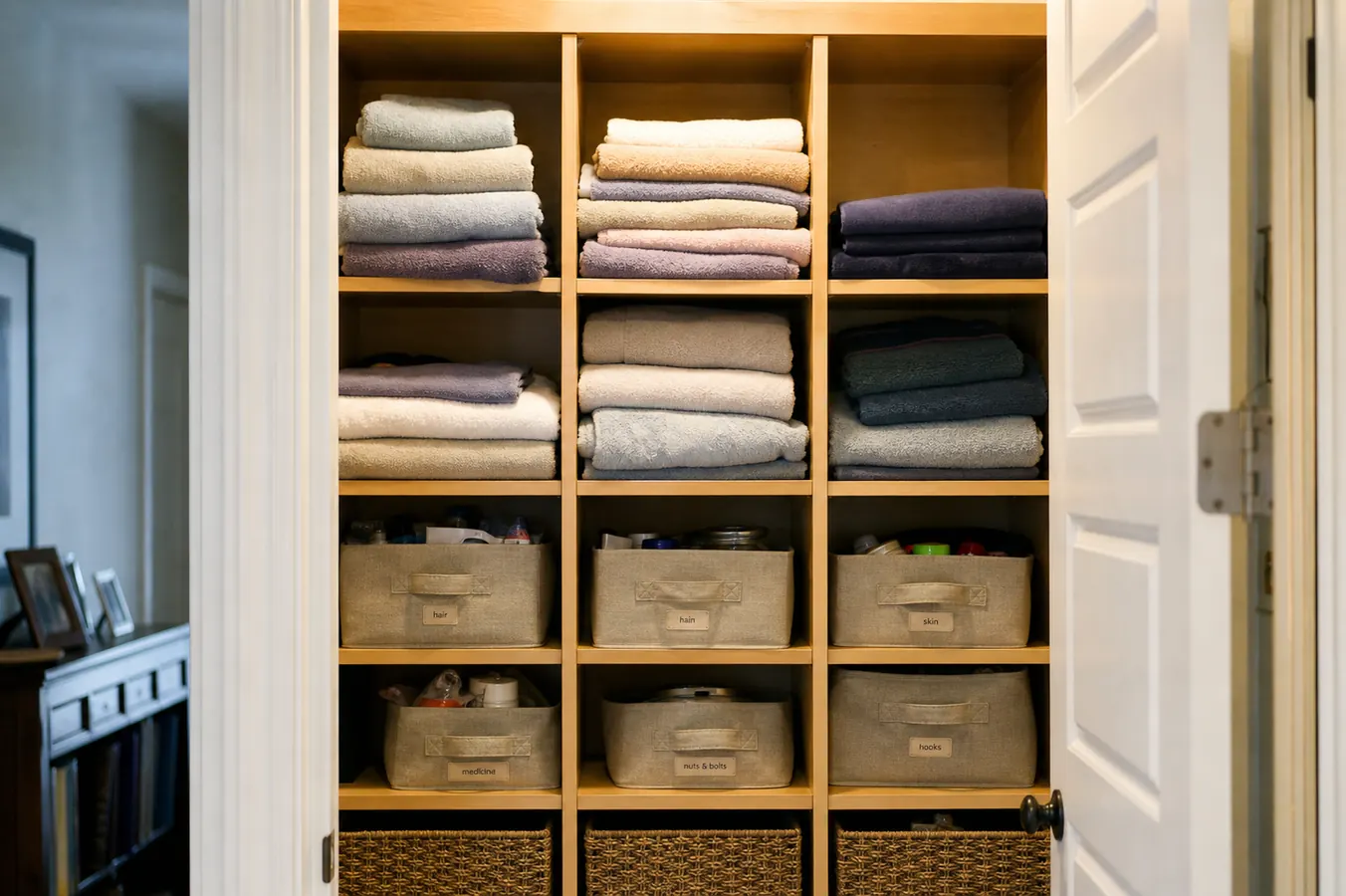
I don't want to talk shelf dividers out of a fair hearing, because there is a real use case where they beat the hanging organizer, and it's worth naming honestly. If you own your home, plan to stay in it for years, and need to store genuinely heavy items, think large stacks of towels, storage bins, board games, out-of-season bedding in vacuum bags, a built-in wood or laminate divider system will hold more weight per shelf and hold it more rigidly. My hanging organizer is rated for roughly 10 pounds per shelf and I treat that as a real ceiling, not a suggestion. A solid wood divider shelf can often carry 25-40 pounds without flexing. If your closet's job is heavy long-term storage rather than daily-use clothing, that capacity difference matters.
Shelf dividers also just look more finished. If you're renovating a closet as part of a home you plan to sell eventually, a built-in system reads as a real feature to a buyer walking through, the way custom closets do in real estate listings. A fabric organizer, no matter how tidy, reads as a rental fix, not a home upgrade. And dividers can be configured to your exact closet width and height, where a hanging organizer comes in one fixed shelf spacing and you either work with that or you don't buy it. If you have unusually tall or short storage needs, that adjustability is a genuine point in the dividers' favor.
The hanging organizer solved Priya's closet in four minutes for a budget price. The professional quote solved the same closet for the price of a used car's brake job.
The Renter Question
I get asked this constantly, so I'll just say it directly: if you rent, skip the shelf dividers entirely unless your lease specifically allows built-in modifications and your landlord has signed off in writing. I've watched a client lose part of a security deposit over drilled holes in a closet wall that she assumed were fine because they were inside a closet, not on a visible wall. The hanging organizer sidesteps that entire conversation. It's also why I recommend it as the default first move for anyone dealing with a genuinely small closet, not just renters. I break down the specific ways it earns its space in a tight closet in 10 reasons a hanging organizer fixes a small closet, but the short version is that it adds shelf storage without stealing any floor space or rod length, which a divider system usually can't claim.
What a Year of Daily Use Actually Looks Like
I want to be honest about the parts of the hanging organizer that aren't perfect, because a comparison that only lists advantages isn't useful to anyone. The fixed shelf spacing means bulky sweaters compress a little when you stack two per shelf, so if you're precious about not creasing knitwear, you'll want to fold more loosely or use fewer shelves per item. It also sways slightly when you're digging through the bottom shelf, which took my husband about a week to stop bumping his head on when he'd bend down for socks. Neither of those is a dealbreaker, but they're real, and a rigid built-in divider doesn't have either problem because it's screwed into the wall and doesn't move.
What shelf dividers don't solve, though, is the upfront friction. Even a simple wire divider kit means a trip to the hardware store, a stud finder, a level, and an afternoon. A wood system means scheduling someone, waiting for an install date, and living around the mess while it happens. For a lot of households, that friction is the actual reason the closet has stayed messy for two years. The hanging organizer removes the friction entirely. You can go from cluttered closet to shelved and folded in the time it takes to watch one episode of something, which for a lot of my clients is the difference between a project that actually happens and one that stays on the list.
Cost Per Year, If You Actually Run the Numbers
I like to run the actual math with clients instead of just trusting the sticker price, because a budget organizer and a premium divider system aren't really competing on the same timeline. If the hanging organizer lasts two years in daily use, which mine has so far with no sign of slowing down, that's a low annual cost to keep a closet functional. A built-in divider system amortized over even ten years of ownership still runs significantly higher per year once you include the install. Dividers can absolutely win that math if you own the home for the long haul and never move. But most of the closets I get called into aren't in forever homes. They're rentals, starter homes people plan to grow out of, or kid's rooms that will need a completely different setup in five years anyway. In those cases the budget option wins even before you factor in that it comes with you when you leave.
The other cost people forget to count is the cost of doing nothing while you wait to decide. I've sat with more than one client who put off fixing a cluttered closet for a year or two because they were saving up for the 'real' built-in solution, meanwhile living out of laundry piles on a chair every single day. A budget organizer installed this afternoon beats a perfect system installed next spring. You can always add shelf dividers later in a different closet, or in this one, once the budget and the timeline actually line up. Nothing about buying the hanging organizer now locks you out of that option.
Priya's closet went from a professional quote to a solved problem in four minutes. See today's price.
The Simple Houseware 5-Shelf Hanging Closet Organizer has over 22,000 reviews and a 4.6-star average. It clips over your existing rod with no tools, no drilling, and no landlord conversation, and it costs a fraction of a built-in divider system.
Amazon Check Today's Price on Amazon →Who Should Buy Which
Buy the hanging organizer if you rent, if your closet is small to medium, if you're storing clothing and lighter folded items rather than heavy bins, or if you just want the closet solved this weekend without scheduling anyone. It's also the right call if there's any chance you'll move in the next few years, since it comes with you and a built-in system doesn't. For the vast majority of bedroom and hallway closets I've worked in, this covers the situation.
Consider shelf dividers if you own your home long-term, if the closet in question is doing heavy-duty storage work like linens, bins, or bulky seasonal items that regularly exceed 10-15 pounds per shelf, or if you're renovating with resale value in mind. If that's your situation, budget for the real cost, get more than one quote, and expect the project to take a day, not an afternoon. Otherwise, start with the budget fix. You can always upgrade to dividers later if the closet's demands change, but you can't easily undo built-ins if it turns out a hanging organizer would have done the job.
Still deciding? Start with the option you can return if it doesn't work.
The Simple Houseware Hanging Closet Organizer costs a fraction of a built-in divider system, installs in minutes, and moves with you if you relocate. If your closet still needs more after that, you'll know exactly what a divider system needs to solve.
Amazon Check Today's Price on Amazon →