
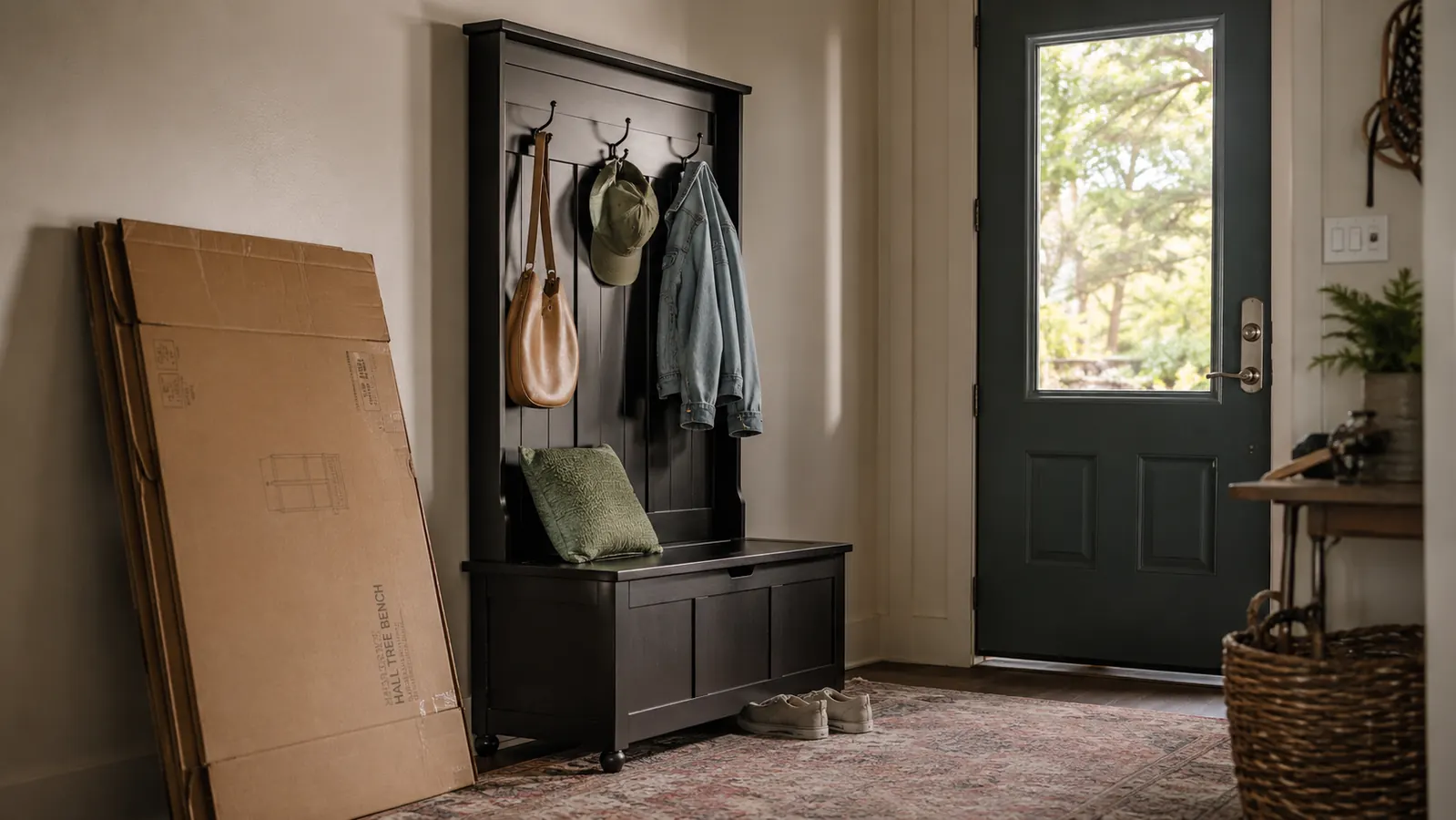
I already wrote one review of this bench on this site. It covers a full year in my own entryway, the wear, the seasons, the weight it carried, and I stand behind every word of it. If you want the day-three-hundred story, that review is here. This one is different on purpose. This is the fine print I left out, either because it didn't fit the long-term story or because I honestly didn't clock it until I watched two other people unbox the exact same HOMCOM Hall Tree with Bench and Shoe Storage in their own homes.
Between my house, my client Renata's downtown loft, and my client Priya's two-bedroom rental with a toddler named Sami underfoot, I've now opened this box three separate times. The HOMCOM bench itself held up in all three homes. What surprised me was everything around the HOMCOM bench: the carton, the hardware bag mix-up, the safety strap nobody mentions in the listing photos, and a hallway that measured fine on paper and still turned out too tight in practice. None of that shows up in a five-star rating, so I'm writing it down here.
The Quick Verdict
Still a genuinely useful entryway workhorse, but don't order it blind. The box is heavier than it looks, wall anchoring isn't included, and the real footprint runs bigger than the wall measurement alone.
Amazon Check Today's Price →Before You Order It, See What Three Households Actually Ran Into
Check today's price and current availability for the HOMCOM Hall Tree with Bench and Shoe Storage, then read the fine print below before it shows up on your porch.
Amazon Check Today's Price on Amazon →How I Actually Tested This
A single-home review only tells you what happened in one hallway, with one family's habits and one person's patience for assembly instructions. So for this one, I asked Renata and Priya if I could be in the room when their boxes arrived, and I took notes on everything that went differently from my own build the year before. Renata lives alone in a downtown loft with a narrow entry hall. Priya has a toddler, a part-time work-from-home setup, and a rental lease that says no drilling into the drywall without approval. Neither of their homes looks anything like mine, which is exactly why the pattern that repeated across all three mattered.
What repeated was this: the box is bigger and heavier than the product photos suggest, the hardware bags are easy to mix up if you don't sort them first, and nobody reads the anti-tip warning until they're already holding the assembled bench upright by themselves, wondering what to lean it against. Those aren't defects in the furniture. They're gaps in what buyers are told going in, and I think an honest review has to cover them alongside the stuff that works.
The Box Nobody Warns You About
This ships in one carton at just under seventy pounds, and it is genuinely awkward, not just heavy. It's long and flat, closer to the shape of a door than a typical furniture box, which means a single person carrying it up a flight of stairs or through a narrow apartment hallway is going to struggle. Priya's building has a service elevator, and she still needed her building super to help wrestle the box through the lobby doors. If you live in a walk-up or your delivery drops at the curb, plan for a second set of hands before the box arrives, not after.
Renata's carton had a crushed corner from transit. Nothing inside was damaged, the foam corner blocks did their job, but it's worth opening the box the same day it arrives rather than letting it sit in a hallway for a week, just in case a claim needs filing. And once it's unpacked, you're left with a genuinely large flattened box and a fair amount of foam and plastic sleeving. None of that is unusual for flat-pack furniture, but it's another twenty minutes of your Saturday that the listing page doesn't mention, breaking down cardboard and figuring out where the styrofoam corners go in your recycling stream.
There's also a smell worth mentioning, the faint new-furniture off-gassing that engineered wood panels tend to carry for the first several days. It's not unusual for particleboard construction and it faded within a week in all three homes with normal ventilation, but if you're sensitive to that kind of thing, or you're setting this up in a small apartment entry with limited airflow, crack a window for the first few days rather than closing the HOMCOM bench up against a stuffy hallway right away.
The Assembly Truth the Manual Leaves Out
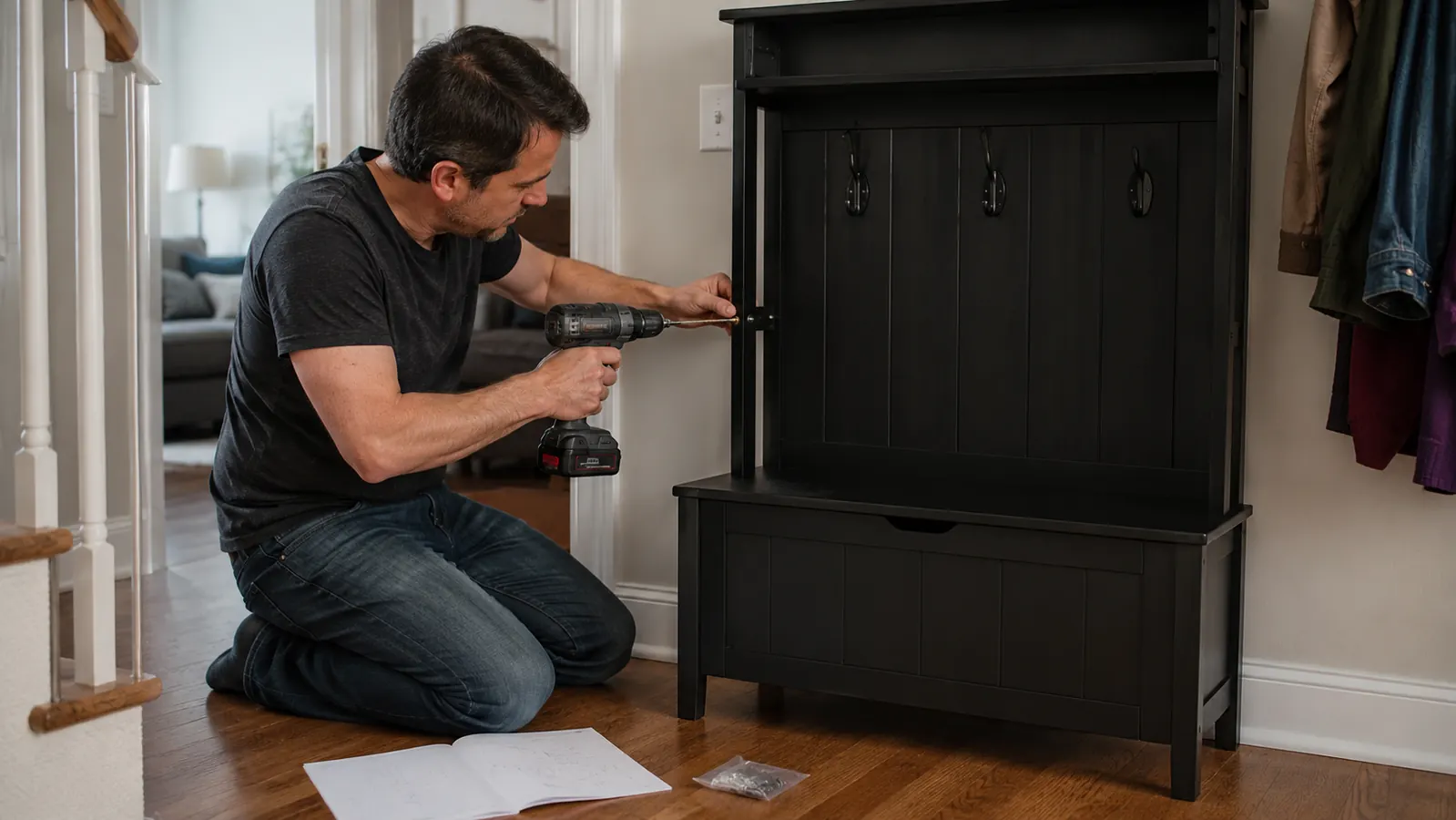
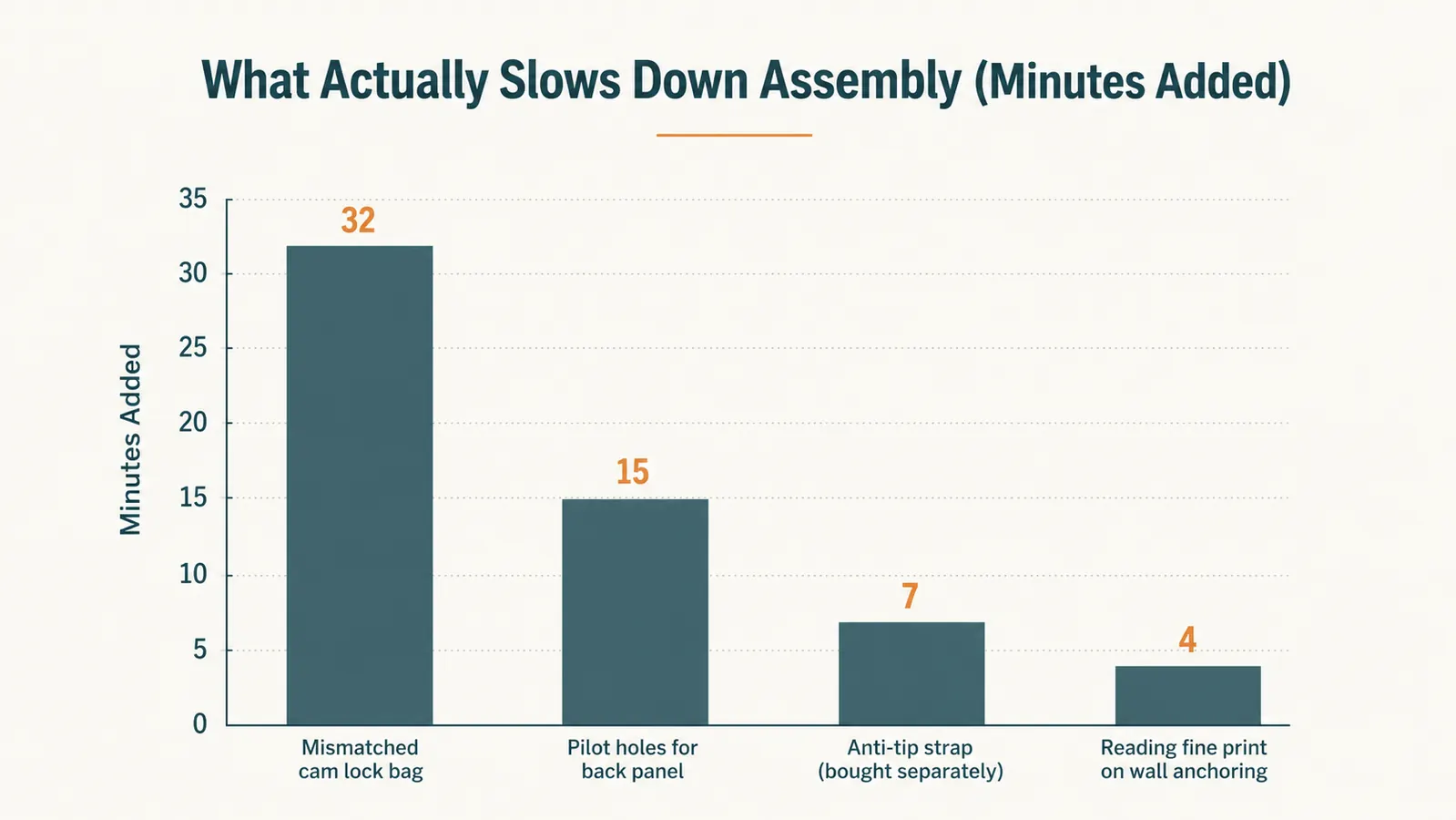
My year-long review already covered the basics: labeled hardware, pre-drilled panels, budget an afternoon. All true. What I didn't mention, because it happened to Renata and Priya rather than to me, is that the small parts bags aren't always sorted the way the manual assumes. Renata's build had two nearly identical cam lock bags that the instructions treat as interchangeable but aren't quite, and she spent close to fifteen minutes test-fitting the wrong one into the back panel before realizing her mistake. It's a minor thing on its own. It stops being minor when you're already forty minutes into a Saturday afternoon build and the manual offers no troubleshooting section for it.
The bigger surprise for both of them was that a screwdriver alone makes this a much longer project than it needs to be. I got through my own build with hand tools because I'm patient and wasn't in a hurry. Priya, juggling a toddler's nap window, pulled out a cordless drill about a third of the way through and cut her remaining time roughly in half. If you own one, use it. If you don't, borrow one, because the difference between hand-driving twenty-some screws into pre-drilled panels and using a driver is the difference between a ninety-minute build and a two-hour one.
The part that actually changed how I'd frame this review is the anti-tip strap. This bench is tall and top-loads with coats, bags, and a shelf full of odds and ends, which means, like most tall furniture near a doorway, it should be anchored to the wall so it can't be pulled forward by a climbing toddler or a dog leaning its full weight on a hook. The box does not include a wall anchor kit. Priya, with Sami crawling around the build site, caught this in the safety warning on the instruction sheet and had to make a separate trip for an anti-tip strap before she'd let the HOMCOM bench go anywhere near her son. That's not a flaw unique to this bench. Most flat-pack furniture in this category ships the same way. But it's the kind of detail that belongs in the product description, not buried on page four of a paper insert, and I want it in this review specifically for anyone with young kids or a boisterous dog in the house.
The Space Math People Get Wrong
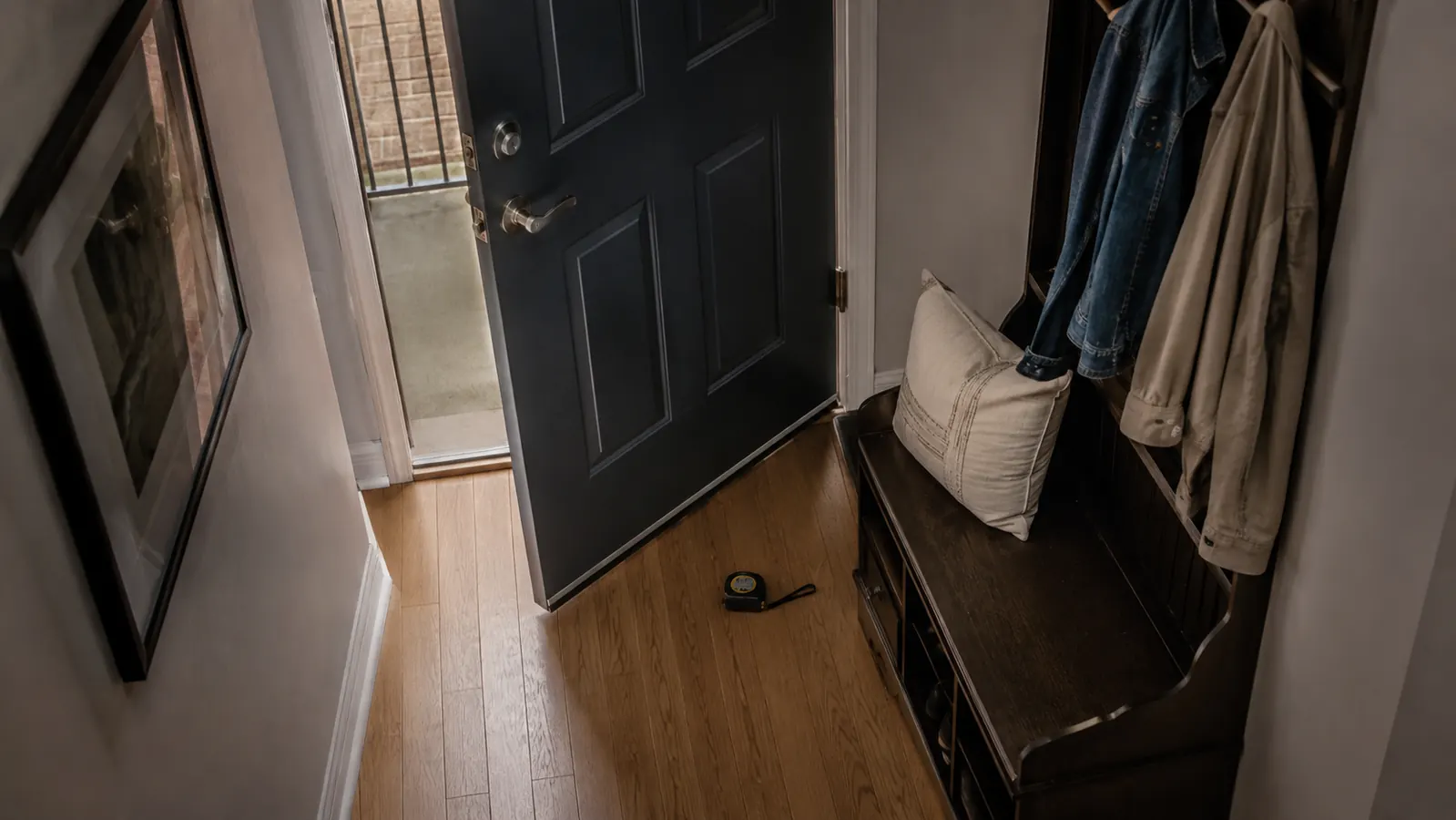
My long-term review already flagged that this needs real wall footage, more than a lot of apartment entries have to spare. What I didn't test until this round is the part people actually get wrong when they measure: they measure the wall, not the door. Renata's hallway had enough flat wall space on paper. What she hadn't accounted for was her front door's swing arc, which crosses directly over where the bench would need to sit. We ended up shifting the whole unit four inches further down the hall and losing a chunk of the shelf's usefulness as a result, because that's where the door stops just short of clipping the corner.
The other measurement people skip is depth with a person actually seated. The box dimensions tell you how deep the bench is against the wall. They don't tell you how much floor space someone needs in front of it to sit down, lean forward, and tie a shoe without their knees hitting the opposite wall or a nearby closet door. In Priya's rental, that worked out to needing close to three feet of clear walking space in front of the bench, not just the unit's own footprint, once you account for someone actually using it the way it's meant to be used. A tape measure at the wall tells you half the story. Walk the motion of sitting down and standing back up before you commit to a spot.
If your entry is genuinely tight, and you'd rather not gamble a return shipment on it, I laid out a lower-commitment alternative in Hall Tree Bench vs. Wall-Mounted Coat Hooks. It won't give you a place to sit, but it also won't leave you measuring a door swing at ten at night trying to figure out where a return label goes.
What Actually Breaks (and What Doesn't)
None of the three units we tracked has had a structural failure. I want to say that plainly before listing the small stuff, because it would be dishonest to bury the good news under a pile of caveats. But a few things are worth knowing before you buy rather than after.
Renata's unit has one shoe cubby divider with a hairline crack near the base. It happened when she briefly stood on the bench to reach a high shelf while hanging a curtain, which is misuse the bench was never built to handle, and I'm including it anyway because it tells you something real: the engineered wood panels flex more than solid wood would under sudden concentrated weight, even if they hold up fine under normal sitting and daily bumping. Treat it as a bench and a shoe rack, not a step stool, and you'll never see this.
On my own unit, one of the plastic caps that covers a coat hook's mounting screw has popped off twice now and needs to be pressed back into place. It's purely cosmetic, the hook itself hasn't loosened at all, but it's the kind of small annoyance that would bug me more if I hadn't already expected a few cosmetic quirks going in. And on all three units, the back panel is an unfinished hardboard rather than a matched laminate. That's invisible against a wall, which is how it's meant to be installed, but if you were hoping to float it in the middle of a room as a room divider, know that the back side won't match the front.
Priya's unit had one more thing worth flagging: a scratch on the top shelf that showed up within the first month, not from daily use but from a set of keys sliding across it repeatedly on the same path. A felt tray or a small dish solves this instantly, and I'd recommend adding one on day one rather than after the first scratch shows up, the way she and I both learned to.
What I Liked
- Genuinely solid once assembled, no wobble or creak in any of the three units we tracked
- Hardware and panels are clearly labeled, no guessing on the main structure
- A cordless drill turns a two-hour build into something closer to ninety minutes
- Handles a family's daily coat and shoe traffic without structural issues
- Ships as one carton, which keeps assembly to a single afternoon
Where It Falls Short
- Shipping carton is close to seventy pounds and awkwardly shaped, plan for a second set of hands
- Cam lock hardware bags can be easy to mix up if you don't sort them before starting
- No anti-tip wall anchor strap included, a separate purchase if you have young kids or a strong dog
- Real footprint includes door swing and seated knee clearance, not just the wall measurement
- Cubby dividers aren't rated for standing weight, treat it as seating only
- Back panel is unfinished hardboard, fine against a wall but not meant to be freestanding
The five-star reviews tell you the bench works. Almost none of them tell you to bring a drill, buy a strap, and measure the door before the wall. Both things can be true at once.
Who This Is For
This bench is a strong pick for anyone with the wall footage to spare and a household that generates real daily coat-and-shoe traffic, kids, a dog, a roommate, or just a family that comes and goes on a tight morning schedule. If you're comfortable spending an honest two hours on assembly, picking up an anti-tip strap for a few dollars, and measuring your actual door swing rather than eyeballing the wall, this bench earns its keep the way it did in my own entryway for a full year. It's also a good fit for anyone who's already tried the piecemeal approach of separate hooks and a shoe tray and is ready for one dedicated station instead. Priya, once the anti-tip strap was in and the toddler-proofing was done, told me it was the first entryway setup she'd owned that didn't make her nervous about a two-year-old climbing on it. That peace of mind is worth factoring in alongside the storage itself.
Who Should Skip It
Skip this one if your entry hallway is genuinely tight, especially if a door swing crosses the space where the bench would need to sit. No amount of clever placement fixes a door that won't close. Renters who can't anchor furniture to a wall should think carefully too, since a tall, top-loaded piece like this is safest when secured, and a lease that bans wall anchors puts you in a tougher spot with any tall furniture, not just this one. And if you live alone with no kids or pets climbing on things, the safety strap concern matters less, but the footprint math still applies. Measure the door before you measure the wall, and you'll know within five minutes whether this bench belongs in your entryway. And if a heavy, awkward seventy-pound carton and a two-hour assembly session sound like more than you want to take on solo, this isn't the bench to order the week you're also unpacking from a move. Wait for a weekend when you have a second pair of hands and a little patience to spare, and the whole experience gets considerably less frustrating.
Now You Know What the Box Won't Tell You
If your hallway clears the door swing and you're ready with a drill and an anti-tip strap, check today's price on the HOMCOM Hall Tree with Bench and Shoe Storage and get the entryway station that's actually still holding up a year later.
Amazon Check Today's Price on Amazon →